

Turn Student Curiosity Into Learning that Matters
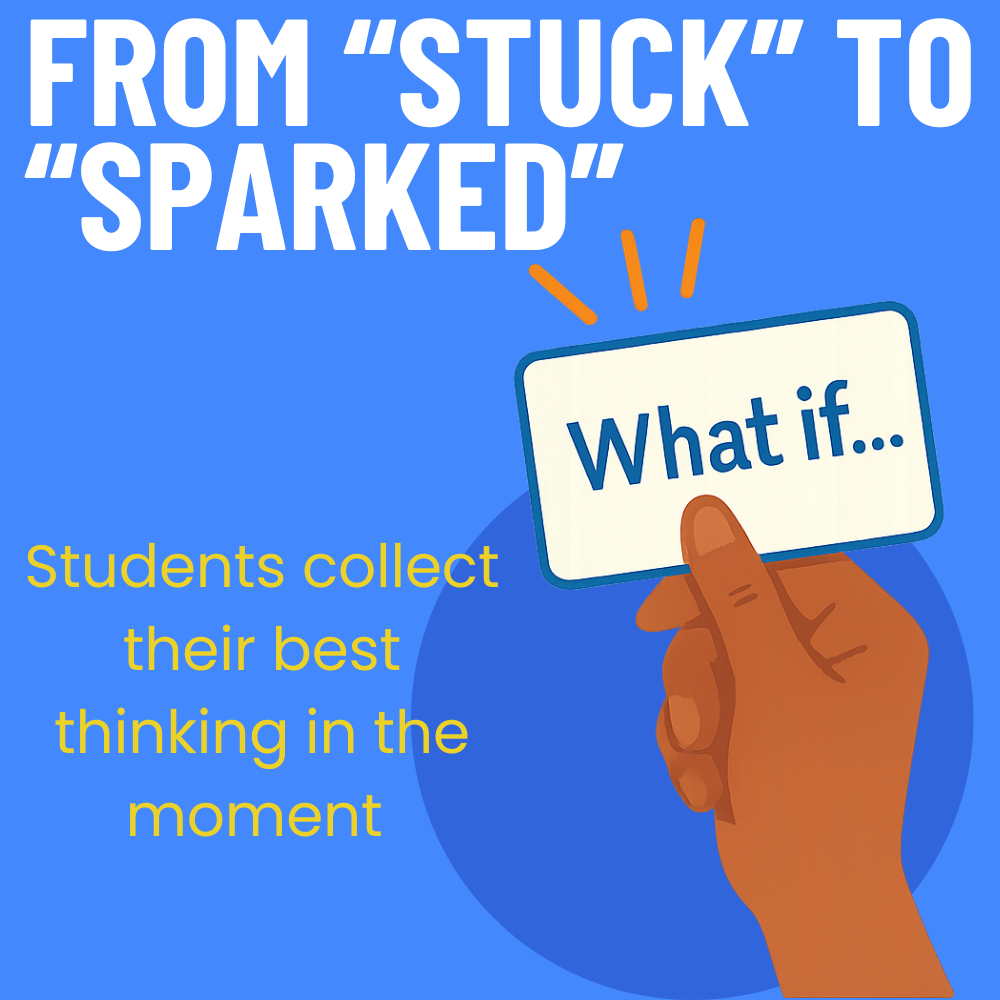
Every teacher has seen it. A student has a sudden question, a sharp observation, or an unexpected idea that comes out of nowhere. But in the middle of class or during a transition, that spark of curiosity often disappears before it can become anything useful.
Brain Sparks is a thinking routine that helps students capture those moments. It gives them a way to hold onto their ideas so they can revisit, explore, and build on them over time. The process is simple, the structure is flexible, and the impact is real.
Whether you teach writing, science, social studies, art, or design, this routine fits alongside what you’re already doing. It doesn’t replace your content. It adds a layer of student thinking that helps everything else stick.
Why This Routine Matters
If your students often say things like:
- “I can’t think of what to write.”
- “I had an idea but I forgot it.”
- “Nothing really stands out to me…”
Then you’re not dealing with a motivation problem. You’re looking at a capture problem. Great ideas fade fast unless students have a place to collect them. Brain Sparks gives them that place.
It helps students:
- Notice their own thinking in real time
- Develop creative confidence
- Turn raw ideas into meaningful work
- Stay connected to their curiosity throughout the learning process
What the Routine Looks Like
Each student records their ideas on individual Spark Cards. The front of the card is where they quickly write what caught their attention. The back is where they can explore the idea further when they revisit it later, adding notes, follow-up questions, early research, peer feedback, or possible next steps that help the idea evolve into something more meaningful.
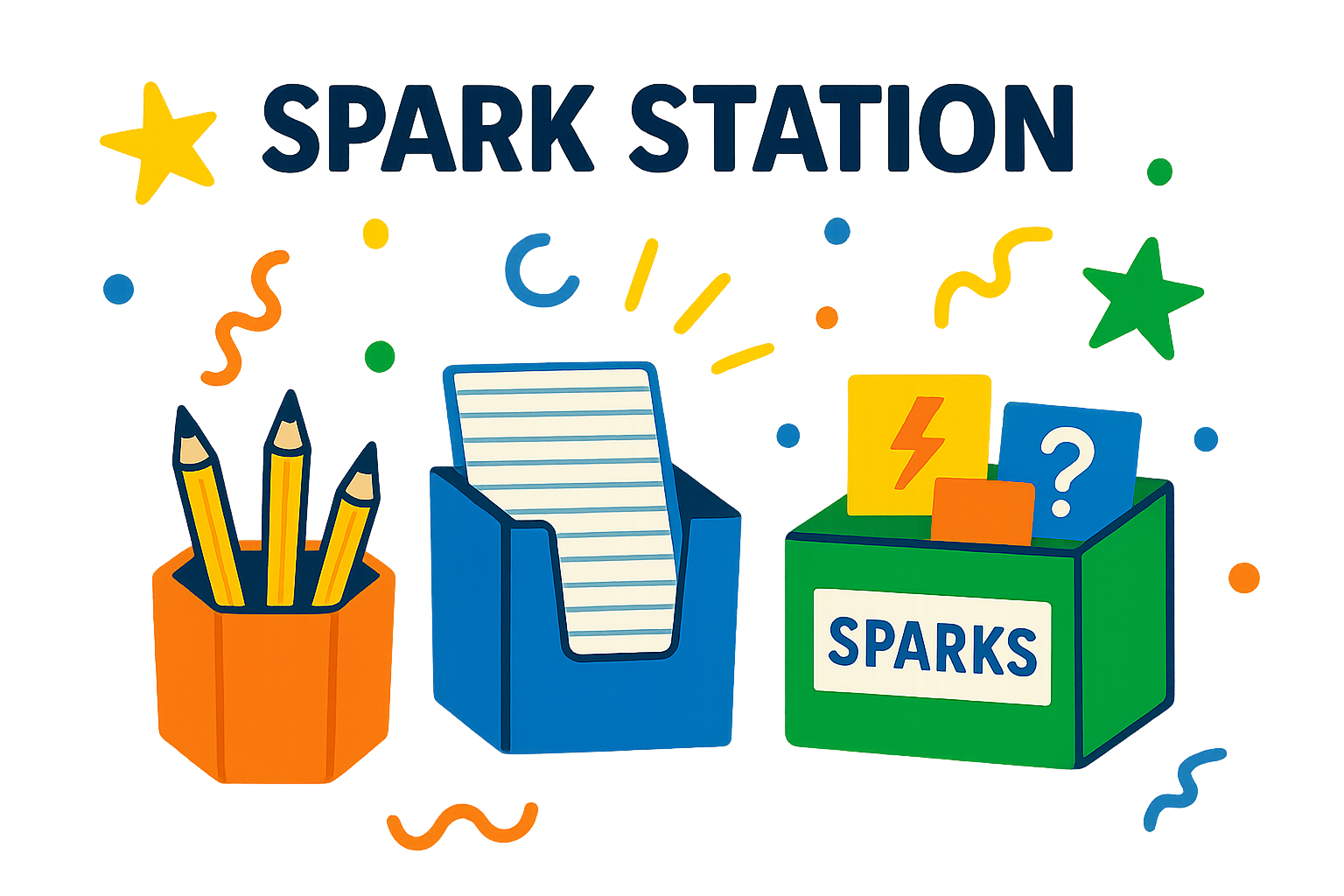
Ideas go into a personal storage box or folder. Inside that box are five sections:
- New Sparks – quick ideas or problems they’ve just noticed
- Glowing Ideas – ones they’ve started thinking more about
- Bright Discoveries – sparks they’ve researched or tested
- Shared Sparks – ideas they’ve discussed or received feedback on
- Favorites – the ones they want to return to again and again
Once a week, students take time to revisit their sparks. They might reflect on a favorite, dig deeper, or use one as a starting point for writing, a project, or class discussion.
Where This Fits in Practice
This routine adapts to any age or subject. In writing classes, it helps generate topics. In science, it supports inquiry. In advisory or SEL spaces, it becomes a tool for reflection. And it works equally well in elementary, secondary, and college classrooms.
In my own creative problem solving course, I use Brain Sparks to help students build what’s essentially a living “bug list.” I prime them to notice things that could be improved, moments of friction, or experiences they care about. When a spark hits, they write it down. Over time, they use those ideas to generate design challenges, write proposals, or develop self-directed projects. The ideas feel personal because they come from observations they’ve made on their own.
You can apply the same method in any setting where attention, curiosity, and reflection matter.
How to Get Started
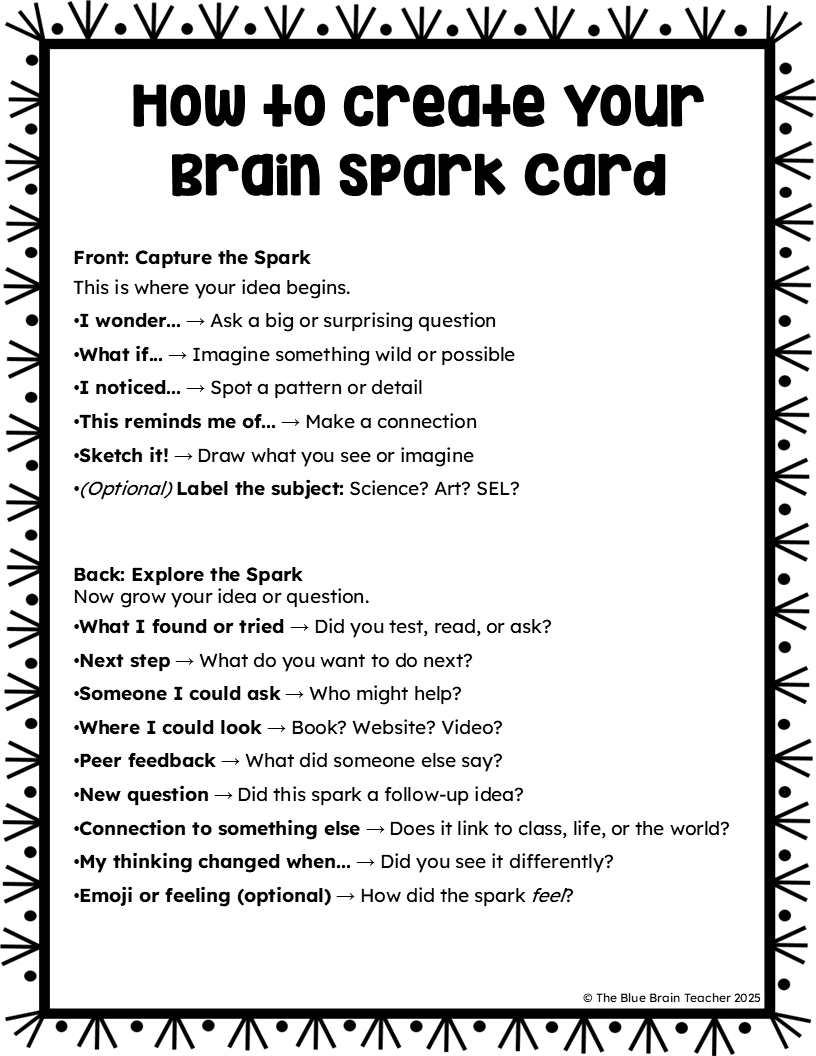
You don’t need to prep a major lesson to begin. Here’s a basic launch you can try right away:
- Explain what a Brain Spark is. Say something like, “Any time you notice something interesting, confusing, or worth improving, write it down before it disappears.”
- Model a few of your own. Keep it real. Show examples that didn’t go anywhere and ones that did. (Yes, that means you should START keeping your own spark box!)
- Give students a simple way to store their sparks. Index cards and a box. A digital folder with tags. Whatever works.
- Make space to revisit the ideas. Once a week, build in a short routine to sort, reflect, and choose a spark to explore further.
Once students understand that their ideas matter, and have a place to grow them, they’ll bring more to everything else you teach.
Why It Works
- It gives students ownership over their ideas
- It normalizes creative thinking as part of the learning process
- It works in the background without needing to be a full lesson
- It gives you insight into what your students really care about
And maybe most important, it turns curiosity into a habit.
Final Thought
The goal isn’t more work. It’s more meaningful thinking, captured in real time. With just a few minutes each week, your classroom becomes a space where ideas don’t just appear and disappear. They take root.
Let your students see that the things they notice matter. That spark of curiosity might be the beginning of something bigger.





Leave A Comment