

How to Teach Creativity Without Losing Rigor, Time, or Your Mind
When we ask students to “be creative,” we often assume they know how. But creativity is not just a personality trait or a lucky talent. It’s a set of teachable skills that students can practice, develop, and apply across all areas of learning.
Still, many students freeze when asked to do something original. They give safe answers. They copy others. Or they ask, “Is this right?” instead of “What else could I try?” This isn’t a sign of disinterest. It’s a sign they’ve never been shown how creativity actually works.
What Actually Builds Creative Confidence
Based on the Torrance Incubation Model and research in Creative Studies, there are six core thinking skills that help students develop true creative ability. Teaching these explicitly gives students a strong foundation for idea generation, problem-solving, and personal expression.
Be Flexible
Students learn to shift directions, adjust when things don’t go as planned, and consider multiple ways to approach a task.
Elaborate
This skill helps students go beyond surface-level thinking. They add detail, clarity, and nuance to make their ideas stronger.
Keep Open
Creative students stay curious. Instead of stopping at their first idea, they stay open to other possibilities that might be better or more interesting.
Be Original
Originality comes from exploring new directions. It encourages students to take risks, make unexpected choices, and develop their own voice.
Put Ideas in Context
Ideas become powerful when they’re connected to real needs or situations. This skill helps students think about relevance and purpose.
Enjoy and Use Fantasy
Imagination builds creative fluency. Using fantasy helps students break from logic, use metaphor, and create with freedom.
Teaching these skills intentionally transforms creativity from a vague concept into a set of tools students can actually use.
How to Support Students in Practicing These Skills
Students often want to be creative but don’t know where to start. Here are a few ways to help them build those six habits without overwhelming them.
Provide Structured Choices
Instead of open-ended prompts with no direction, give students a menu of options that target the same creativity skill. For example, let them choose between rewriting a scene with a twist, inventing a product, or designing a character. This gives autonomy within a safe structure.
Use Sentence Starters to Scaffold Reflection
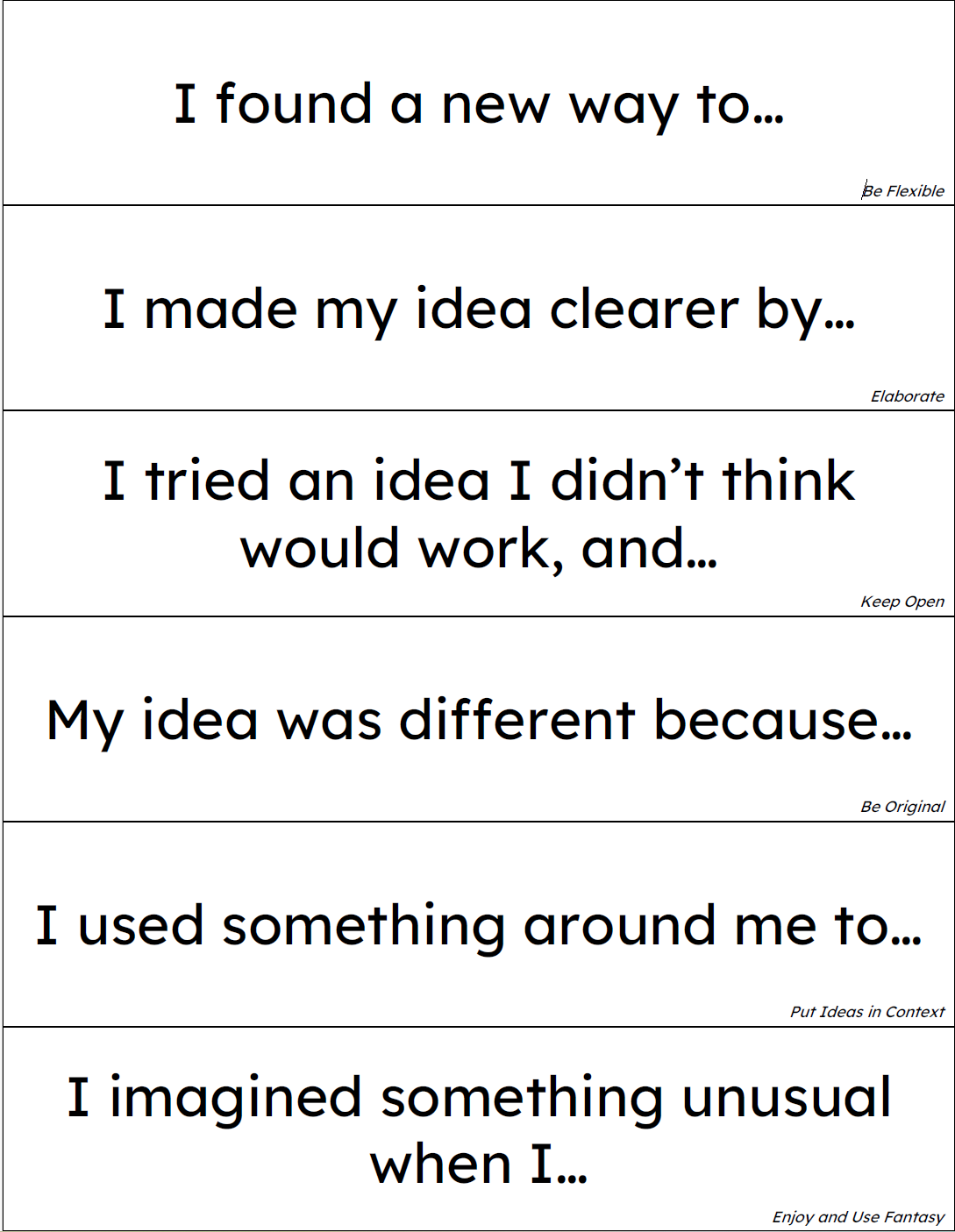
Help students talk about their creative process. Prompts like “I changed my plan when…” or “My idea was different because…” make their thinking visible and deepen metacognition.
DOWNLOAD FREE SENTENCE STARTERS
Normalize Imagination and Fantasy
Many students have learned to suppress imaginative thinking in favor of being “correct.” Rebuild that muscle with playful tasks like “Retell your morning routine as a spy mission” or “Invent a new rule for your school if you were in charge.”
Celebrate Process Over Product
Use journals, quick reflections, or feedback circles to highlight how ideas evolved. Point out risks students took, not just polished outcomes. This helps them understand that the value lies in the process of thinking creatively, not just in a final answer.
Framing Creativity as Identity Work
Creativity is more than an academic skill. It shapes how students see themselves. When students believe “I am a creative thinker,” they begin to approach challenges with more confidence, ownership, and resilience.
Encourage students to reflect on their own creative identity. Ask: When did you make an original decision? When did you try something unexpected? What surprised you about your thinking?
Give students space to talk about and explain their creative choices. Let them see that their way of thinking, building, expressing, and connecting ideas is valid—even if it looks different from their peers. This creates a culture where creativity is not just encouraged but expected and valued.
Start Small, but Be Intentional
Fostering creative thinking doesn’t require a new curriculum. It starts with intention. Add one creativity skill to your next lesson. Offer one moment of reflection. Make one space where it’s safe to try and revise.
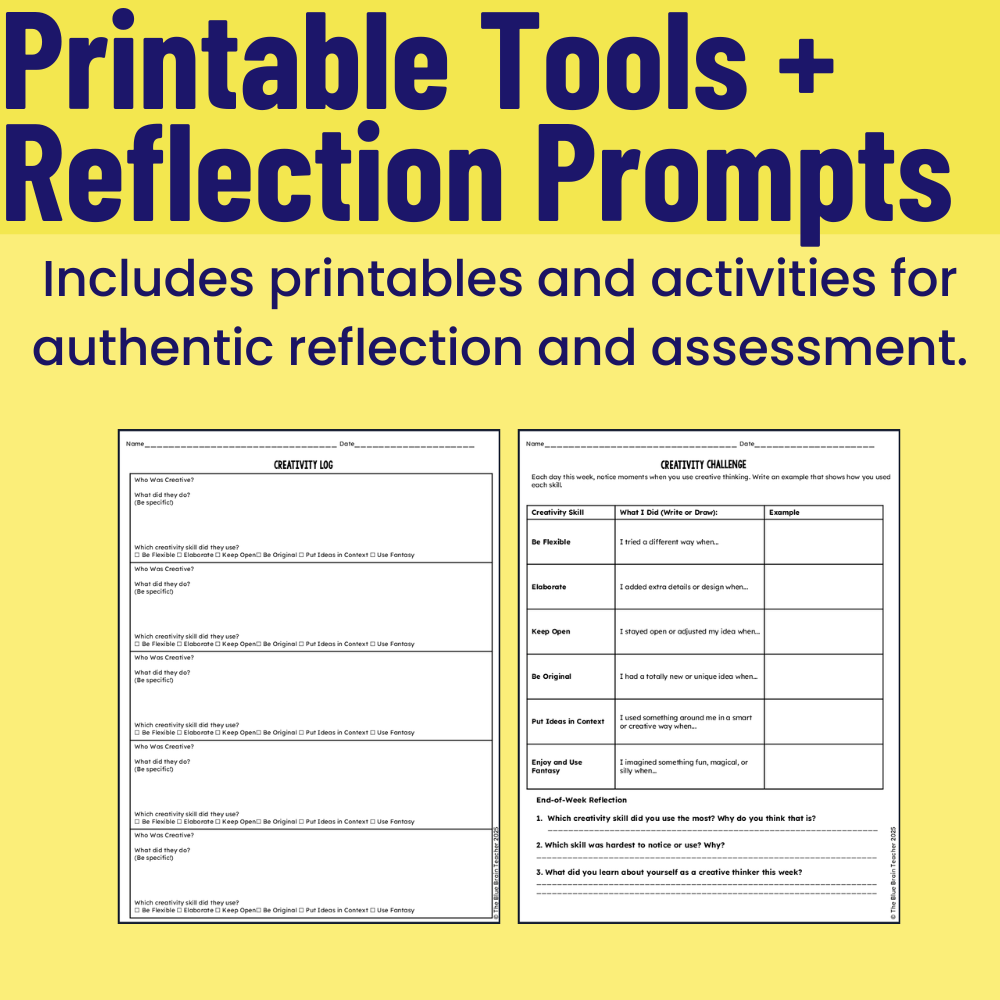
If you’re looking for a classroom-ready resource to help you teach these six creativity skills through structured stations and student reflection, you can buy it on Teachers Pay Teachers.
Or, to get started right away, download this free printable: link to 6 Creativity Sentence Starters here. It’s an easy way to help your students begin talking about their ideas with confidence and clarity.
Creativity is a muscle every student has. We just need to show them how to use it.





Leave A Comment