

Designing for Creative Thinking and Agency
Creative thinking develops under specific conditions. My work focuses on designing those conditions using Creative Problem Solving, translating research into structured frameworks, tools, and learning experiences that support idea generation, judgment, and ownership across learning environments.
Learn More About the Framework →
Applying Creative Thinking Across Contexts

K–12 Classrooms
Lesson frameworks, tools, and pathways for developing creative thinking in everyday instruction.

Higher Education
Course design, project-based learning, and Creative Problem Solving in academic settings.

Curriculum & Learning Design
Competencies, progressions, and systems for embedding creative thinking into learning environments.

Organizations & Teams
Applying creative problem solving to collaboration, decision making, and innovation.

Research & Collaboration
Conceptual work, emerging models, and opportunities to explore and apply this work together.
Creative Thinking Doesn’t Develop by Accident
Creative thinking is often treated as something that either emerges naturally or depends on individual talent. In practice, it develops under specific conditions.
Learners need structured opportunities to generate ideas, evaluate them, and take ownership of their thinking. Without intentional design, creativity becomes inconsistent, difficult to teach, and uneven across classrooms and systems.
This work focuses on making creative thinking teachable, repeatable, and scalable through clear processes and frameworks.

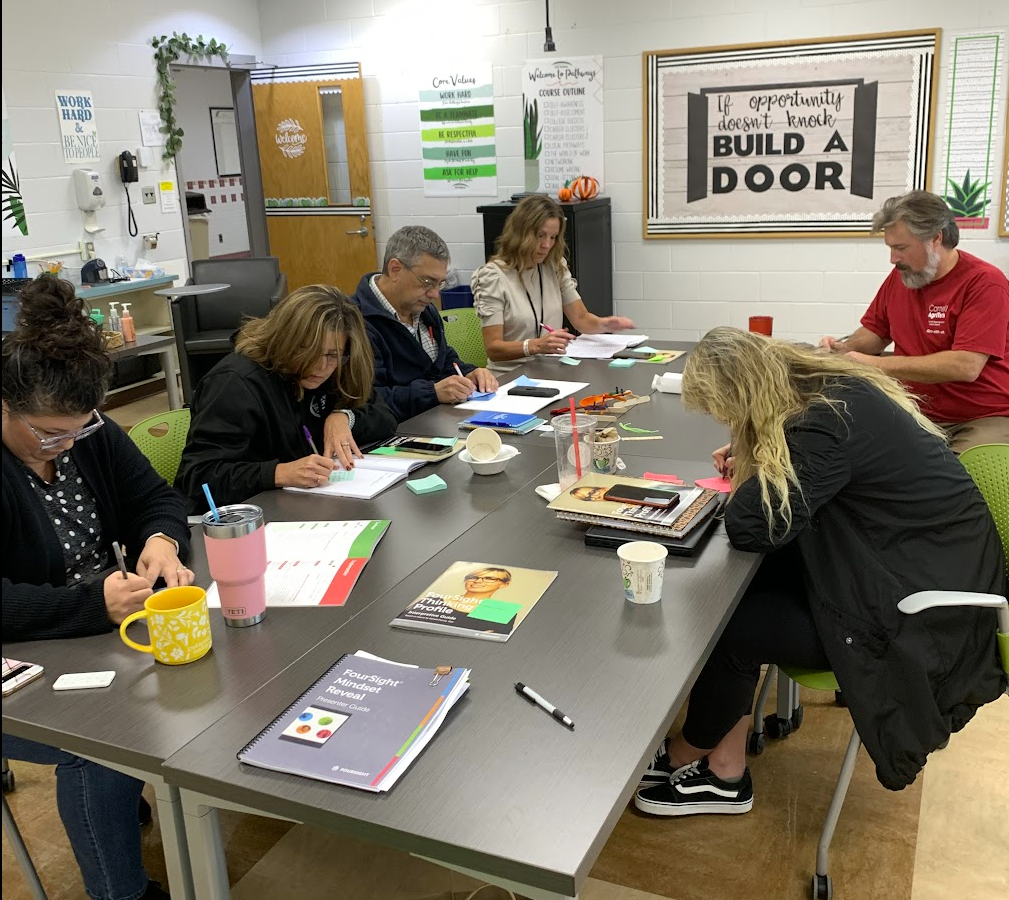
Applying Creative Problem Solving in Schools
At WNY Tech Academy, I worked with educators to apply Creative Problem Solving as a structured approach to collaboration and decision making.
Using the FourSight framework, teams moved through distinct stages of the creative process, from clarifying challenges to generating and evaluating ideas. This created a shared language for thinking and helped teams engage more productively with complex problems.
We also mapped the student experience to identify where creative thinking could be more intentionally supported, revealing gaps between instructional goals and classroom practice.
This example reflects how structured processes and designed conditions can make creative thinking visible, actionable, and consistent across a system.
Tools Built from the Framework
These tools translate the creative thinking framework into practical use, depending on your goals and context.
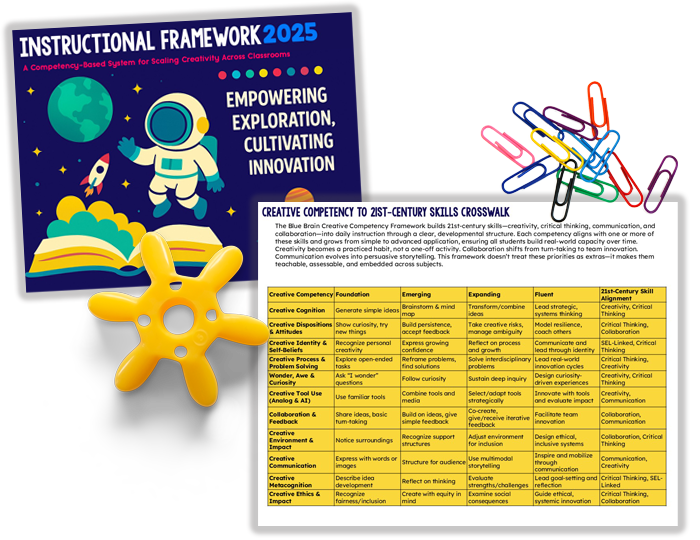
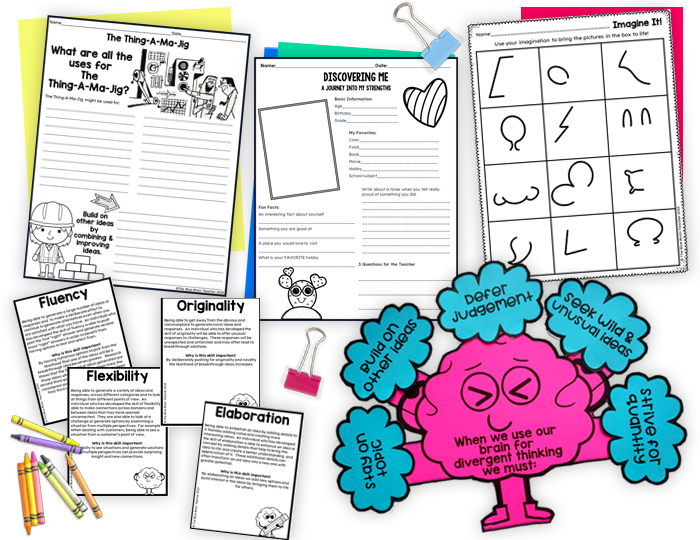
Both options are grounded in the same Creative Problem Solving framework, designed to support idea generation, evaluation, and ownership.
Creative Thinking Begins with Psychological Safety
Creative thinking begins with a sense of safety. Learners need the confidence to take risks, share ideas, and participate without fear of judgment.
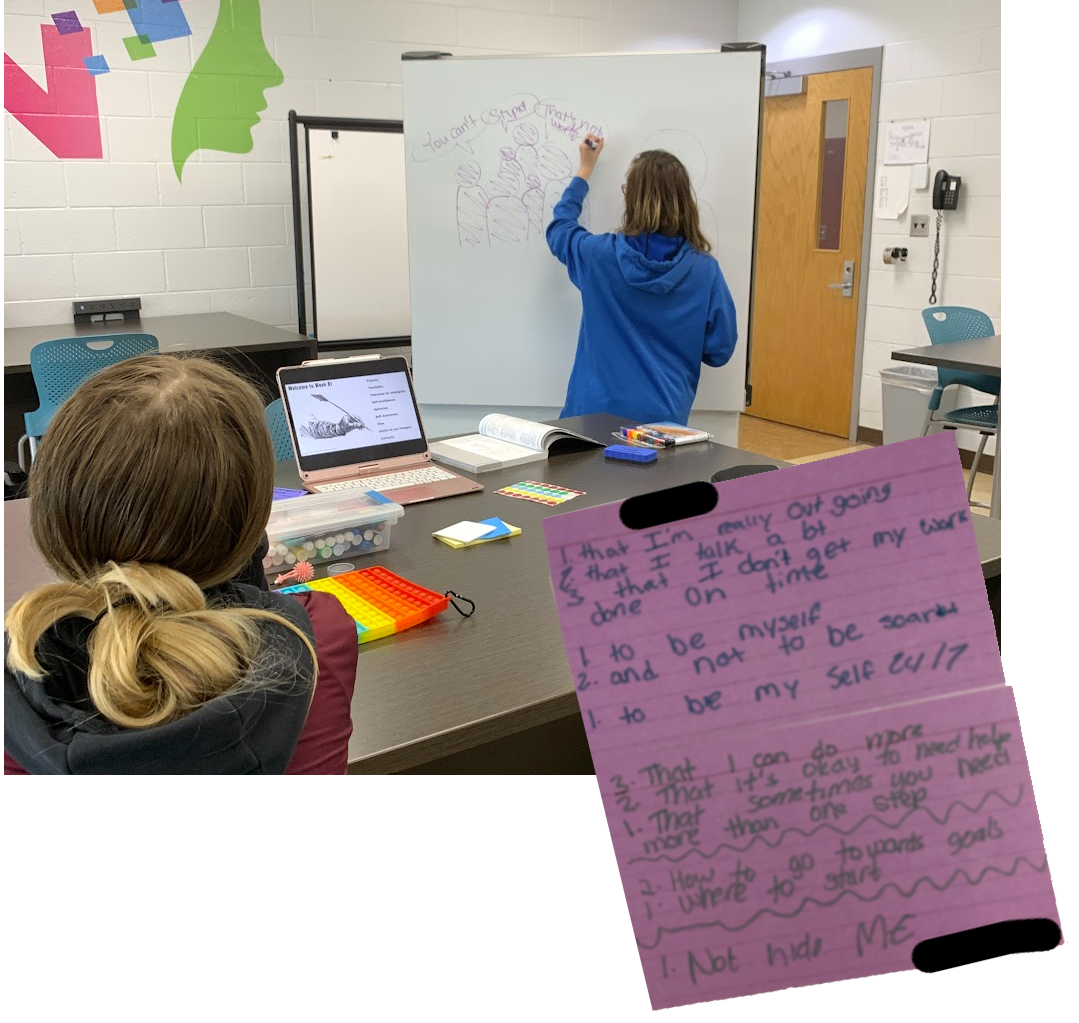
In one session focused on psychological safety, students reflected on what helps them feel supported in the classroom. Their responses were direct and consistent:
“to be myself,” “not to be scared,” “it’s okay to need help,” “not hide me.”
These responses point to a core condition for creative thinking. Before learners can generate ideas or solve problems, they need environments where they feel seen, heard, and valued.
Designing for creative thinking starts here.
Go Deeper
These pieces explore the ideas, frameworks, and questions that shape this work.







Reach and Application of This Work
This work has been used by educators and organizations to apply structured approaches to creative thinking in real learning environments. The reach reflects ongoing use, adaptation, and integration into classroom and instructional practice.

Hi, I’m Selma Dawani. My work focuses on designing structured approaches to developing creative thinking, problem solving, and learner agency.
I began this work in classrooms, where I saw how rigid systems limited curiosity and engagement. That experience led me to apply Creative Problem Solving frameworks to instructional design, creating tools and models that make creative thinking teachable and consistent across learning environments.
Since then, this work has expanded across K–12 education, higher education, and organizational settings, supporting educators and teams in applying creative thinking in real contexts.
The Blue Brain Teacher is one application of this work, translating these ideas into practical tools and frameworks for classroom use.