

What is this framework?
The Blue Brain Creative Competency Framework is a research-based model for teaching creativity as a set of specific, observable, and developable skills. It gives educators a clear roadmap for cultivating creative thinking, confidence, and collaboration at any age or stage.
Why does it exist?
For too long, creativity has been treated as a talent some students “just have” or as a vague quality that’s hard to define, teach, or assess. At the same time, schools have prioritized standardized content over the human capacities students actually need to thrive in an unpredictable, AI-driven world. This framework addresses that gap by breaking creativity into teachable competencies.
Who is it for?
This framework is for teachers, school and district leaders, curriculum designers, and anyone who believes education should develop creative, resilient, and ethical learners.
Why does it matter now?
In an age where AI can write, calculate, and analyze faster than humans, education must shift its focus. We can no longer prepare students just to perform routine skills. We must prepare them to do what machines can’t: think creatively, collaborate deeply, reflect ethically, and adapt to complexity. The framework helps schools meet this challenge while promoting engagement, equity, and purpose.
The 12 Creative Competencies
Creativity is not one vague skill but a set of twelve concrete, observable competencies that students can develop over time. These cover thinking, habits, collaboration, and reflection.
Back Side HEADING HERE
Content hereBack Side HEADING HERE
Content hereBack Side HEADING HERE
Content hereThe Four Levels
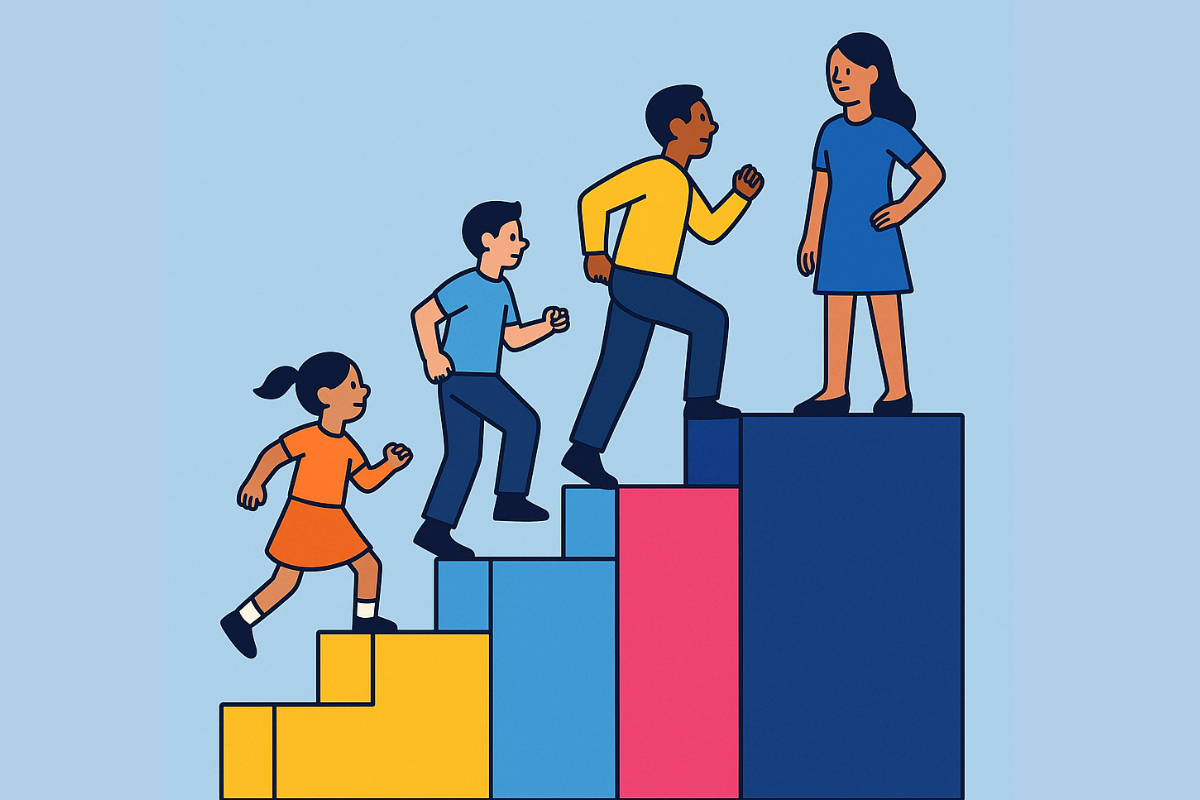
Creativity is not something students either “have” or “don’t have.” Like any skill, it develops in stages as learners build confidence, skill, and independence.
The Blue Brain Creative Competency Framework organizes creative growth into four developmental levels:

Why Levels Instead of Grades?
These levels are developmental, not tied to age or grade.
A 6th grader may be at Foundation in one competency and Expanding in another.
The goal is to meet each learner where they are, and support them as they progress at their own pace.
This approach ensures all students build strong creative habits and capacities before moving to more advanced levels — no matter when they begin.
Why It Works

The Blue Brain Creative Competency Framework is grounded in decades of research on creativity, developmental psychology, and learning science.
It draws from proven pedagogies such as constructivism, inquiry-based learning, and social-emotional development. The framework addresses real-world needs by equipping students with the human skills machines can’t replicate: flexible thinking, collaboration, ethical reasoning, and resilience.
It integrates seamlessly with initiatives like SEL, Universal Design for Learning (UDL), and the 21st-century skills of communication, creativity, collaboration, and critical thinking.
Schools and classrooms have piloted the framework with students of all ages, demonstrating measurable growth in creative confidence, idea generation, and problem-solving over time.
How to Use the Framework
The Blue Brain Creative Competency Framework is designed to be flexible, scalable, and easy to implement in any educational setting.
Where to Start
We recommend beginning with the Foundation level, even for older or advanced students, unless they’ve already experienced structured creative learning. Starting at Foundation ensures students develop the mindset, language, and habits needed to progress confidently through the higher levels.
Who Can Use It
This framework can be implemented by:
- Individual teachers in a single classroom
- Whole schools aligning across grade levels
- Districts building creative capacity system-wide
It works across subjects and grade bands, supporting both general education and specialized programs.
Getting Started
You can begin with just one competency or embed the full set over time. To help you plan, we’ve created a Starter Guide with sample activities, planning templates, and a checklist to get you started.


Frequently Asked Questions
Choose Your Path...

Education Leaders
Align creativity with district goals and measure results at scale.
Teachers & Coaches
Practical tools and lessons you can use right now.
Curriculum Designers
Competencies, rubrics, and pathways ready to integrate.

Families & Communities
Why creativity matters and how you can support it at home.

Researchers & Collaborators
Theory, evidence, and opportunities to partner.