

Why These 10 Strategies?
When narrowing down the list, the goal was to identify strategies that would:
- Maximize Impact
Each strategy is chosen for its potential to significantly boost creativity in the classroom. - Minimize Effort
We understand that teachers are already balancing many responsibilities, so we focused on strategies that can be implemented with minimal additional time and resources. - Encourage Sustainability
These strategies are easy to maintain throughout the year, ensuring that creativity becomes an ongoing part of your classroom culture.
Here’s a brief explanation of why each strategy was selected:
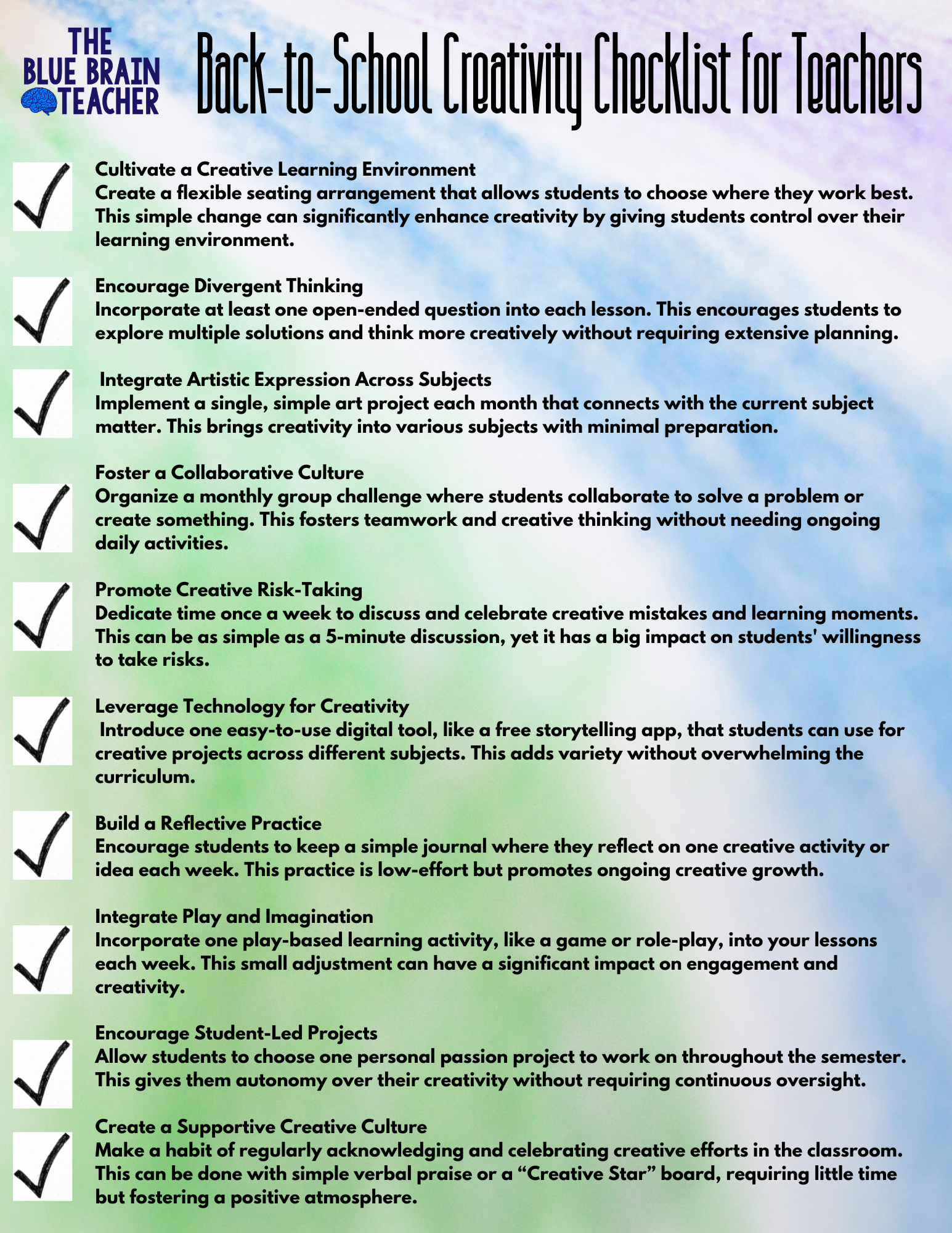
1. Cultivate a Creative Learning Environment
- Allowing flexible seating gives students autonomy and a sense of ownership over their learning environment. This simple change can immediately boost engagement and creativity without requiring a complete classroom overhaul.
2. Encourage Divergent Thinking
- By incorporating one open-ended question into each lesson, you encourage students to think beyond the obvious. This strategy is easy to implement and can be integrated into any subject or activity.
3. Integrate Artistic Expression Across Subjects
- A monthly art project that connects with your subject matter is an efficient way to weave creativity into your curriculum. It provides students with a creative outlet while reinforcing their learning.
4. Foster a Collaborative Culture
- Monthly group challenges promote teamwork and creative problem-solving. They require minimal setup and can be adapted to fit your current topics or objectives.
5. Promote Creative Risk-Taking
- Dedicate a small amount of time each week to celebrate creative failures. This practice encourages students to take risks and learn from their mistakes, fostering a growth mindset in a manageable way.
6. Leverage Technology for Creativity
- Introducing a single digital tool that students can use across subjects helps them explore new creative avenues. It adds variety to their learning experience without overwhelming your lesson planning.
7. Build a Reflective Practice
- A weekly journaling activity encourages students to reflect on their creative processes. This low-effort strategy helps students become more aware of their creativity and how it can be developed.
8. Integrate Play and Imagination
- Incorporating one play-based activity each week makes learning more enjoyable and engaging for students. It’s a small change that can lead to big improvements in creativity and participation.
9. Encourage Student-Led Projects
- Allowing students to pursue a personal project throughout the semester gives them a chance to explore their interests deeply. This strategy is low-maintenance for teachers but highly rewarding for students.
10. Create a Supportive Creative Culture
- Regularly acknowledging creative efforts helps build a classroom culture where creativity is valued. This can be done quickly and easily, yet it has a lasting impact on student confidence and creativity.
These strategies were selected with you in mind. They are designed to be straightforward, effective, and sustainable, helping you nurture a creative classroom without adding to your workload. By incorporating these practices, you’ll not only enhance your students’ creativity but also make your teaching experience more dynamic and fulfilling.
Let’s make this school year one where creativity thrives in every classroom!



Leave A Comment