

Are you looking for engaging ways to develop your students’ language skills and creative thinking. One delightful tool that has stood the test of time is the humble hink pink. These clever, rhyming word puzzles challenge students to think outside the box, sharpen their problem-solving skills, and have a little fun with language along the way.
What Are Hink Pinks?
For the uninitiated, hink pinks are short riddles where the answer consists of two rhyming, one-syllable words. Think of clues like, “What do you call a chubby feline?” The answer? A fat cat! Simple, yet ingenious. These puzzles encourage students to dig deep into their vocabulary, explore synonyms, and think creatively about how words can fit together in unexpected ways.
But hink pinks aren’t just about rhyming for the sake of rhyming. They’re about stretching the imagination and fostering a love for language. In a world where standardized tests often dominate the classroom, hink pinks offer a refreshing break—a chance for students to play with words, laugh, and learn all at once.
Why Use Hink Pinks in Your Classroom?
Integrating hink pinks into your lesson plans can have a multitude of benefits. Here’s why they’re worth your time:
One of the most powerful tools in a student’s academic arsenal is a robust vocabulary. Hink pinks serve as an excellent vehicle for expanding this essential skill. When students engage with hink pinks, they aren’t just passively learning new words—they are actively seeking them out. This active learning process is what makes hink pinks so effective.
As students work to solve hink pinks, they are prompted to think about synonyms, antonyms, and even homophones that might fit the rhyme scheme. This process requires them to tap into their existing vocabulary while also pushing them to explore and discover new words. For example, if the clue is “a large feline,” students might initially think of “big cat.” But as they refine their answers to fit the rhyme, they might come across “fat cat.” This exploration not only introduces them to new vocabulary but also deepens their understanding of word meanings and usage.
Moreover, hink pinks often require students to recall and apply words they may not use regularly, reinforcing their retention. This continual exposure and application of vocabulary in a playful context make it more likely that students will remember and use these words in their writing and speech. In short, hink pinks are a fun and engaging way to broaden students’ linguistic repertoire, giving them the tools they need to express themselves more precisely and creatively.
Solving a hink pink isn’t just about finding two words that rhyme; it’s about analyzing the clues, considering multiple possibilities, and making connections between ideas.
For instance, if the clue is “a loud bell,” students might initially think of obvious answers like “big bell” or “red bell,” but neither of these rhymes. They need to dig deeper, think about what makes a bell loud, and how that concept might fit with a rhyming word. Eventually, they might arrive at “ringing ding”—a solution that requires them to connect the sound (ringing) with an onomatopoeic word (ding). But since it is a one syllable answer the answer must be “ring ding.” This process of narrowing down options and connecting ideas that aren’t immediately obvious helps students develop critical thinking skills.
Hink pinks also encourage students to think laterally, which is the ability to solve problems through an indirect and creative approach. Unlike linear thinking, where one follows a straight path from problem to solution, lateral thinking requires students to approach the problem from different angles. This kind of thinking is essential for solving complex, real-world problems where answers aren’t always straightforward. By practicing lateral thinking through hink pinks, students become better equipped to tackle challenges that require innovative solutions.
For younger students or those who are just beginning to explore language, simple hink pinks with more straightforward clues and common rhymes can be used to build confidence and enthusiasm. These early successes help to build a love for wordplay and language, which can be cultivated over time.
On the other hand, older or more advanced students can be challenged with more complex hink pinks, or even the hinky pinky (two-syllable answers) and hinkity pinkity (three-syllable answers) variations. These more challenging puzzles require students to use higher-order thinking skills, as they must consider a wider range of vocabulary and more nuanced word meanings.
Additionally, the playful nature of hink pinks makes them appealing to students of all ages. They’re a break from the routine of traditional classroom activities, yet still provide valuable educational benefits. This engagement through fun and challenge ensures that all students are actively participating in their learning, making it a win-win for both teachers and students.
Collaboration in solving hink pinks often leads to rich conversations where students must explain their thinking, justify their answers, and consider alternative perspectives. For example, one student might suggest “flat mat” for a clue, while another might propose “thin skin.” The ensuing discussion about which answer fits the clue better encourages students to articulate their reasoning and listen to the reasoning of others.
This process not only deepens students’ understanding of the material but also helps them develop essential communication skills. They learn how to express their thoughts clearly, how to respectfully disagree, and how to compromise—all crucial skills for working in groups both inside and outside the classroom.
Furthermore, collaboration in solving hink pinks creates a sense of community within the classroom. Students see that they can learn from each other and that their contributions are valued. This positive collaborative experience can increase their confidence and willingness to participate in future group activities, leading to a more cohesive and supportive learning environment.
Bring Hink Pinks into Your Classroom Today
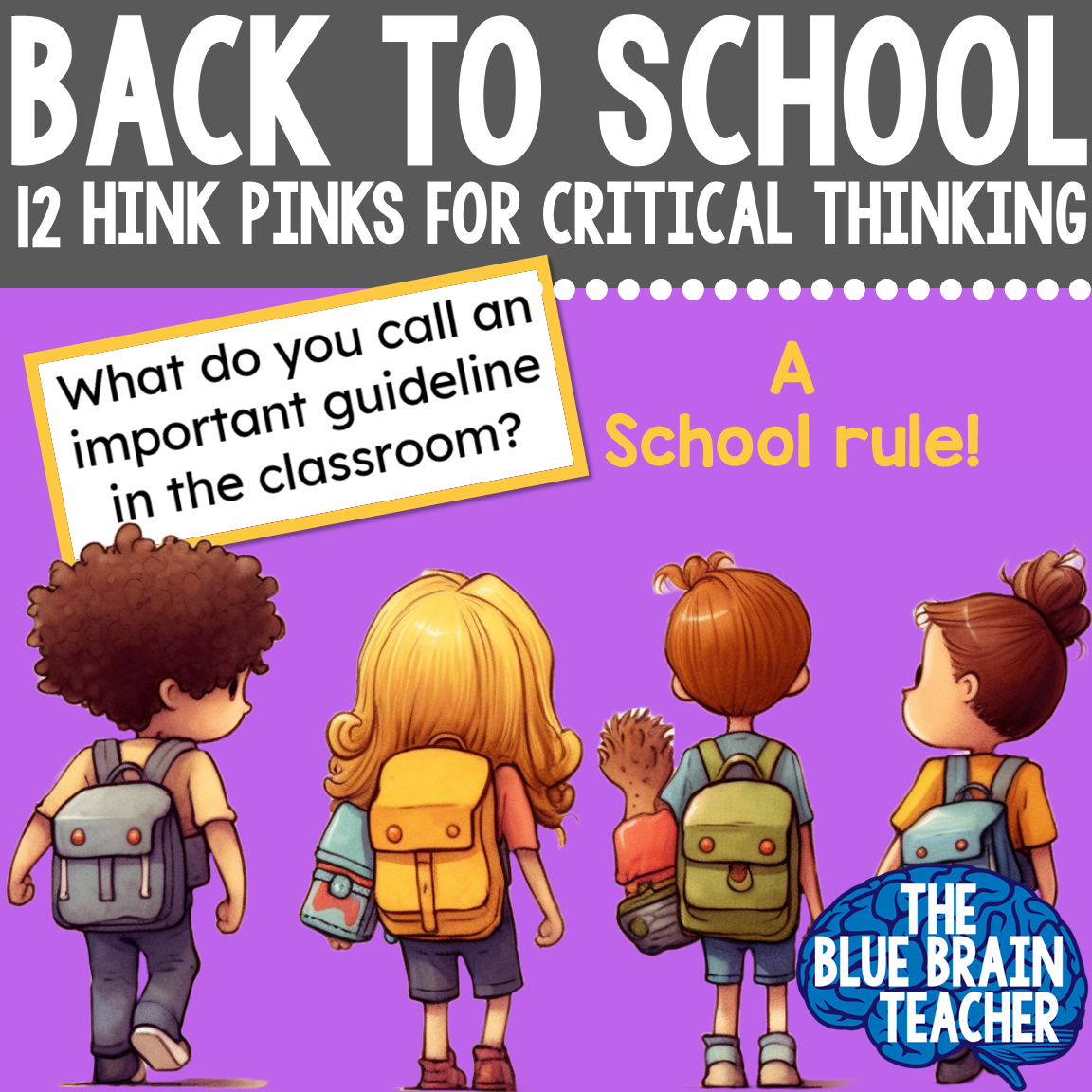
Ready to try hink pinks with your students? I’ve created a collection of themed hink pinks that are perfect for different times of the school year. From Thanksgiving to Back to School to Halloween, these puzzles are designed to spark creativity and critical thinking while tying into the themes and events your students are already excited about.
Each set contains 12 hink pinks that are ready to use in your classroom. They’re ideal for warm-ups, brain breaks, or even as part of a language arts lesson. And at just $1.50 each, they’re an affordable way to add a touch of fun and intellectual challenge to your teaching toolkit.
So, why not give your students the gift of creative thinking? Check out the new hink pinks available now and see how they can transform your classroom into a hub of linguistic play and learning.


Leave A Comment