

Helping Reluctant Writers
For some students, writing does not feel exciting. It feels overwhelming.
The moment a blank page appears, some students immediately shut down. They stare at the paper, avoid eye contact, sharpen pencils repeatedly, or quietly whisper, “I don’t know what to write.”
Teachers see it every day. Parents see it during homework time. And often, the issue is not that children lack imagination. In fact, many struggling writers are incredibly creative thinkers.
The real problem is that traditional writing tasks can place too many demands on students all at once. Students are expected to generate ideas, organize thoughts, remember spelling, structure sentences, use punctuation, and avoid mistakes all before they even feel emotionally ready to begin. For younger learners especially, that level of cognitive overload can make writing feel intimidating instead of expressive.
Why Writing Resistance Happens So Often
One of the biggest misconceptions about reluctant writers is that they simply “do not like writing.” In reality, many students dislike the pressure associated with writing.
Some children fear getting answers wrong. Others struggle with perfectionism. Some do not know how to begin. And for students with language delays, attention challenges, anxiety, or low confidence, the blank-page effect can feel enormous.
This is why low-pressure literacy activities tend to work so well in elementary classrooms. When students are invited to play with ideas instead of immediately “performing” academically, their language often becomes more natural, detailed, and expressive.
That shift matters because confidence usually develops before strong writing skills, not after. Students who feel emotionally safe are far more willing to take creative and academic risks, and that willingness is often what allows meaningful literacy growth to happen.
The Power of Visual Prompts in Early Literacy
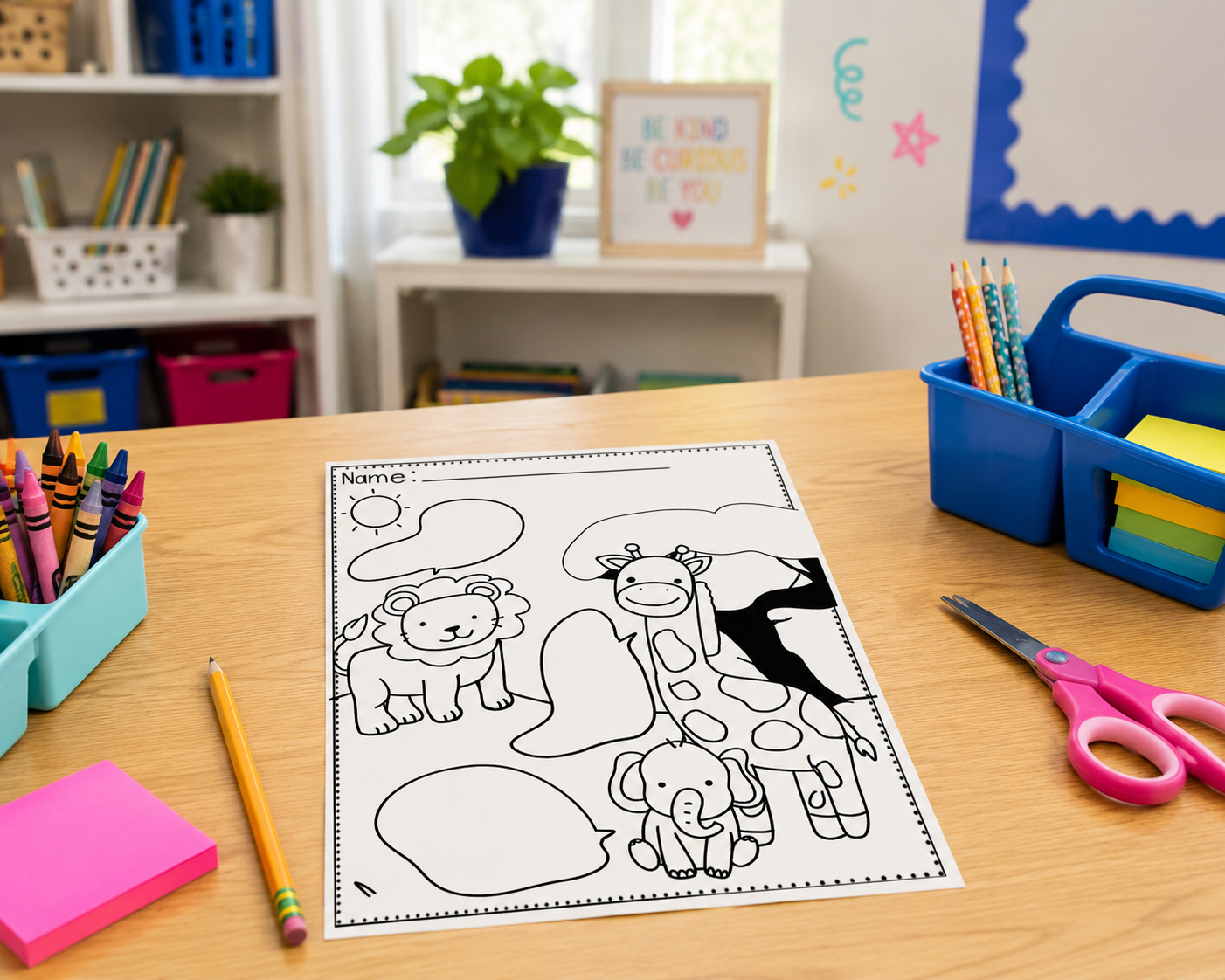
One of the simplest ways to reduce writing anxiety is by giving students something concrete to respond to visually.
Pictures naturally spark conversation, imagination, and emotional reactions. They reduce the pressure of inventing ideas from nothing because students already have something to observe, interpret, and react to. Instead of struggling to come up with a topic, students can focus their mental energy on exploring ideas.
This is especially effective for hesitant writers, English language learners, younger elementary students, children receiving speech and language support, and students who struggle with idea generation.
Instead of asking students to immediately create a full story, visual prompts provide a starting point. And when those visuals are paired with open-ended thinking opportunities, students often begin writing more voluntarily and with less resistance.
Why Speech Bubble Activities Work So Well
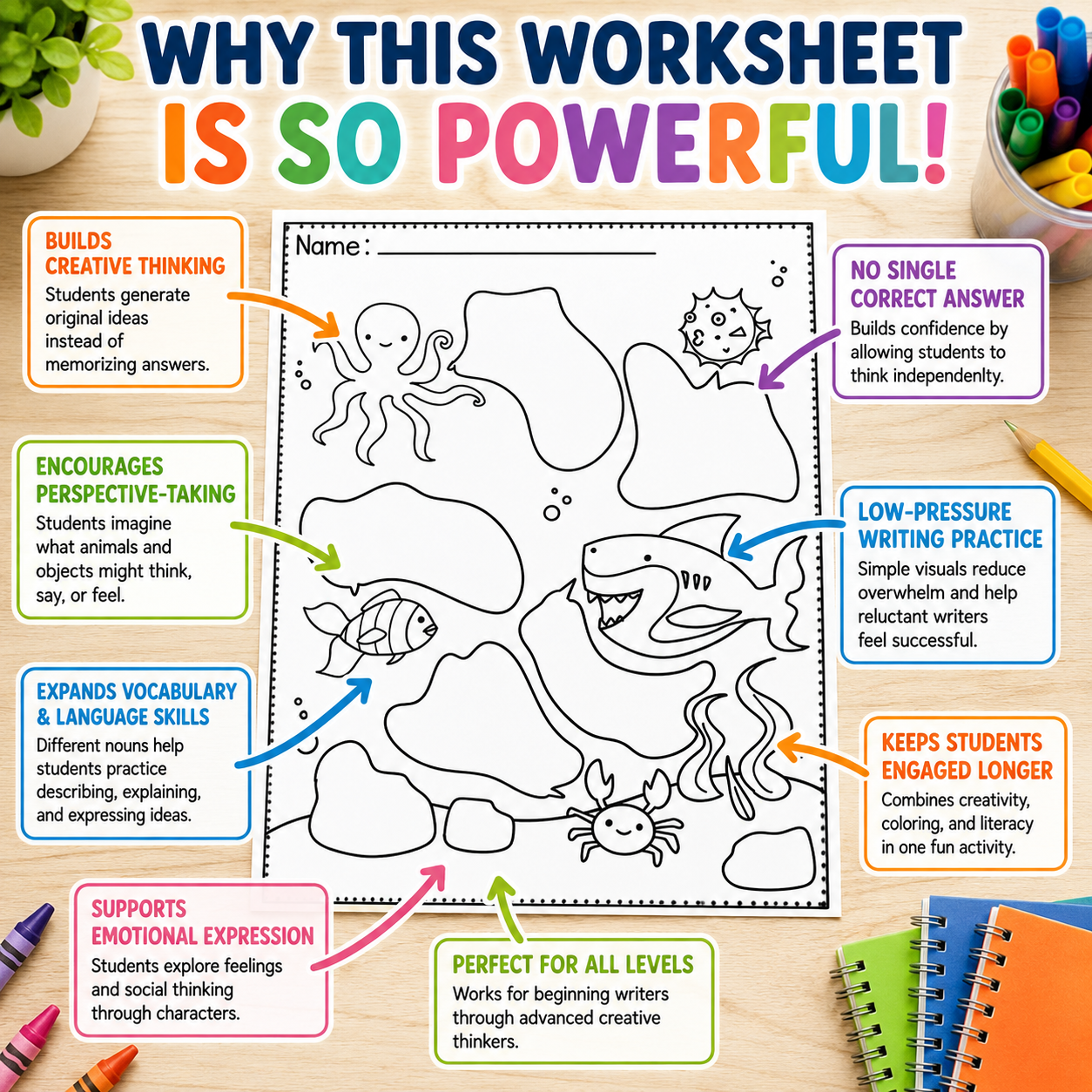
Speech bubbles are deceptively powerful instructional tools because they immediately shift writing from something formal and evaluative into something conversational and playful. That emotional shift matters, especially for younger learners who may already associate writing with pressure or fear of making mistakes.
Instead of asking students to “write a paragraph about this picture,” speech bubbles encourage students to think more naturally and imaginatively:
“What might this character say?”
“What is this animal thinking?”
“How would this object feel?”
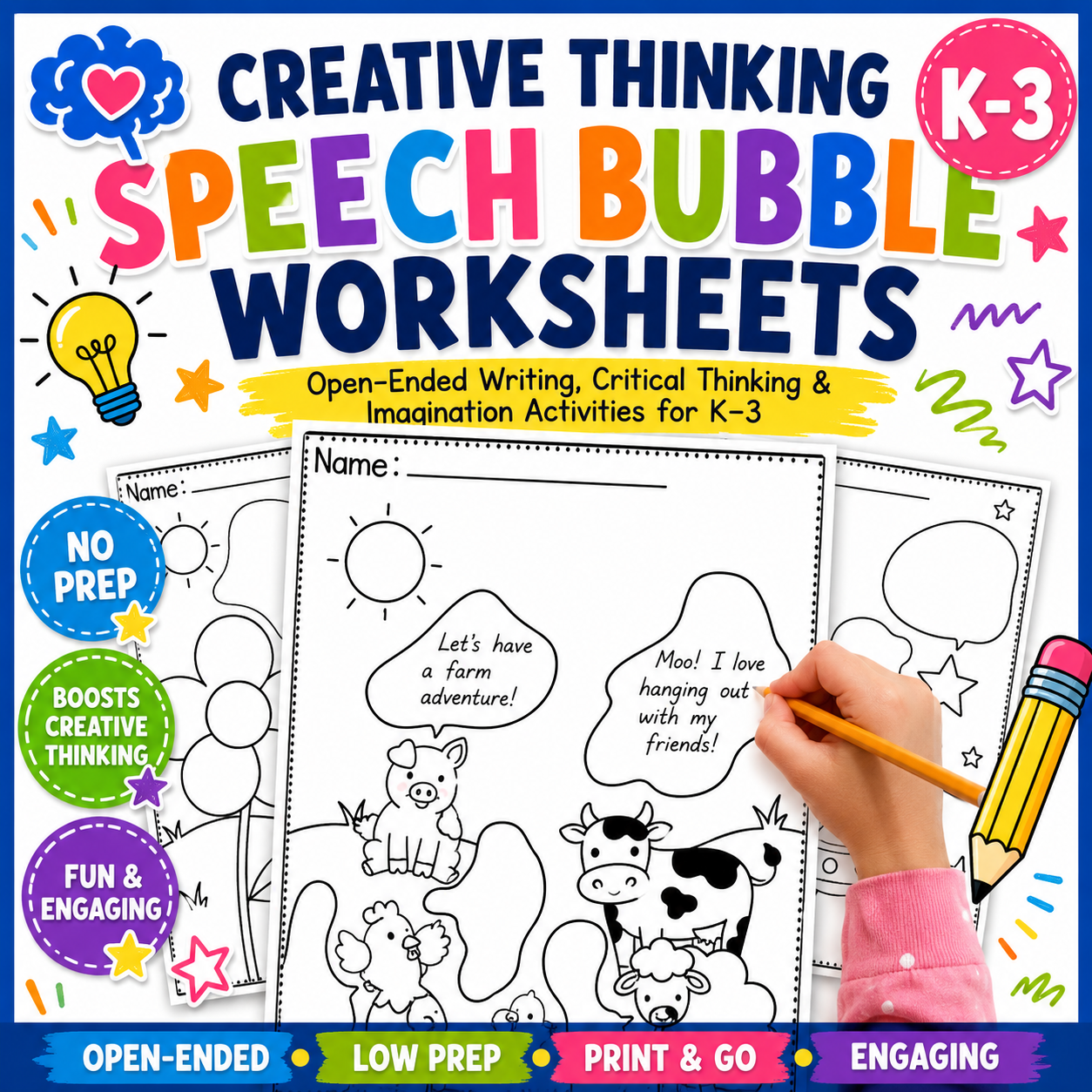
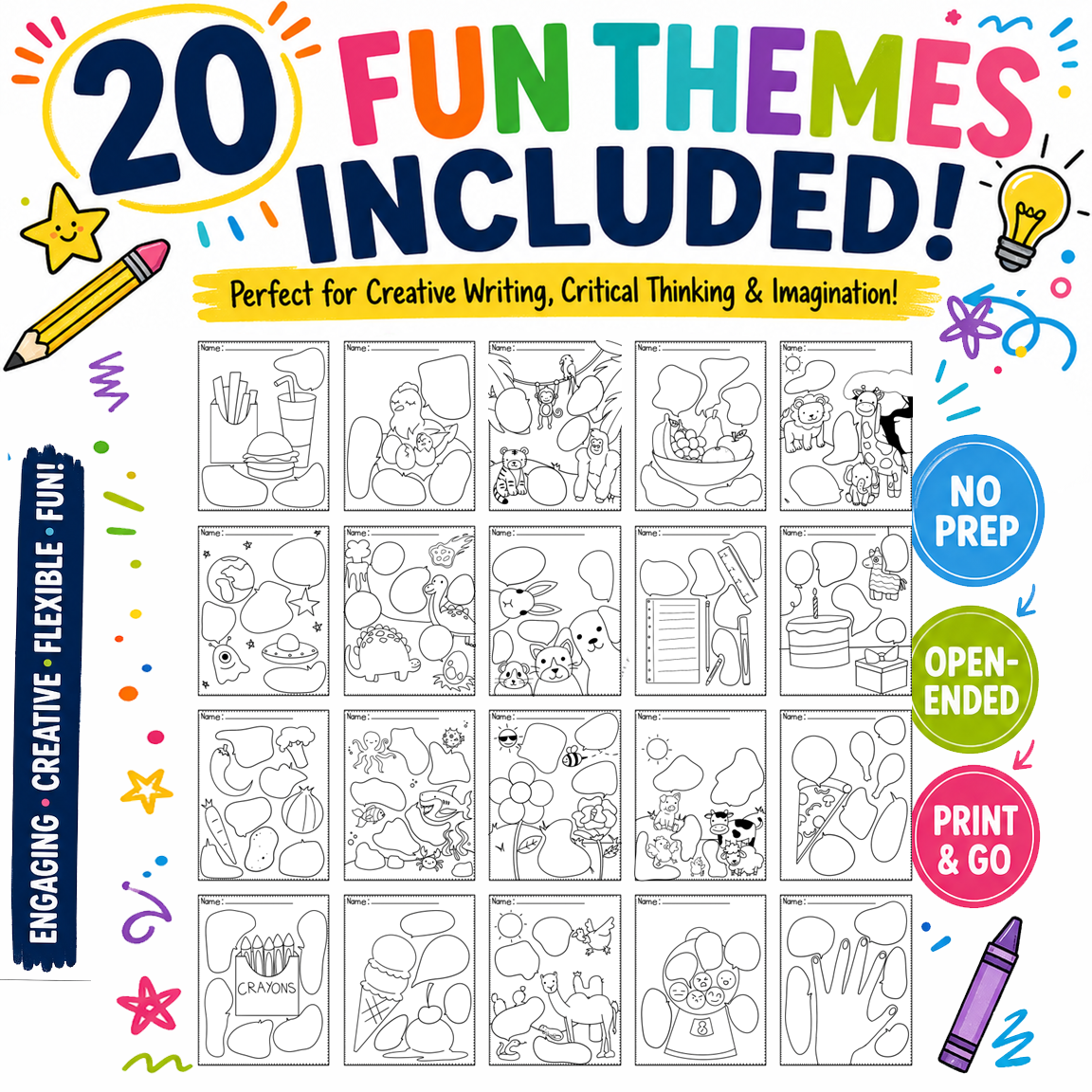
You can get a set of 20 speech bubble creativity writing pages on TpT.
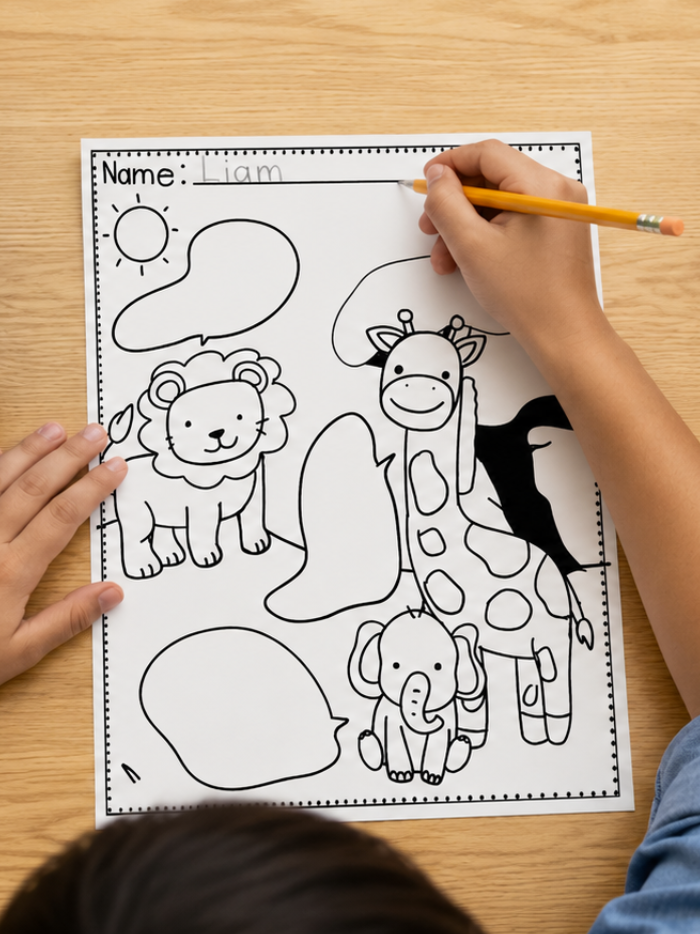
That subtle reframing lowers emotional resistance while increasing creative engagement. Students naturally begin practicing perspective-taking, inference, emotional expression, sentence fluency, and imaginative thinking often without realizing they are engaging in rigorous literacy work.
For many reluctant writers, speech bubbles feel safer because there is no single “correct” answer. And when students feel safe creatively, participation increases dramatically.
Creativity Builds Stronger Writers
One thing educators sometimes overlook is that creativity and literacy are deeply connected.
Strong writing is not just about grammar, spelling, or handwriting. Writing also requires flexible thinking, idea generation, emotional awareness, perspective-taking, and confidence in self-expression. These are creative thinking skills as much as they are literacy skills.
Open-ended activities help students develop those foundational abilities in ways worksheets with fixed answers often cannot. A child who struggles to complete traditional sentence prompts may suddenly produce hilarious, imaginative responses when asked what a penguin, watermelon, or backpack might be thinking.
That creativity becomes the bridge into stronger writing habits.
Importantly, the writing does not need to be perfect for growth to happen. Participation comes first. Confidence comes first. Students need opportunities to discover that their ideas have value before they fully develop the technical skills needed to communicate those ideas fluently.
Why Low-Prep Activities Matter So Much
Teachers are constantly balancing instructional goals with limited time, energy, and resources. That is why simple print-and-go literacy activities tend to become classroom favorites, especially when they work across multiple settings.
Open-ended speech bubble pages are particularly useful because they can adapt to many classroom needs including morning work, literacy centers, fast finisher bins, partner discussions, substitute plans, SEL activities, homeschool learning, independent practice, and small-group intervention.
The flexibility matters because students can engage at different developmental levels using the same activity. A beginning writer may produce a short sentence while a more advanced student may naturally expand into storytelling, dialogue, humor, or descriptive writing.
The same activity supports both without requiring entirely separate materials or directions.
Independent Thinking Matters More Than Perfect Writing
One of the most valuable things educators can do is create spaces where students feel comfortable sharing original ideas.
Not every writing activity needs rigid structure. Sometimes the best literacy growth happens when students are allowed to experiment with ideas, take creative risks, and approach writing with curiosity instead of fear.
Children need opportunities to see writing as more than simply completing an assignment correctly. Writing is communication. Writing is thinking. Writing is imagination made visible.
And often, the students who struggle most with traditional writing activities are the very students who flourish once creativity enters the process.
Because when writing feels playful, safe, and emotionally accessible, students stop focusing so heavily on avoiding mistakes. They begin focusing on ideas.
And that is often where meaningful writing growth begins.

Leave A Comment