
Kickstart the New Year with Academic Goal-Setting
Can you believe how quickly the year has flown by? It feels like just yesterday we were setting up our classrooms or homeschool spaces for the start of the school year. Now, the New Year is just around the corner—a perfect opportunity to reflect, reset, and prepare for the year ahead.
As we head into this season of fresh beginnings, there’s one essential skill you can teach your students that will benefit them for a lifetime: goal-setting. Studies show that people who write down their goals are 42% more likely to achieve them. That’s a powerful statistic, and it highlights how important it is to introduce this practice early.
With SMART goals—Specific, Measurable, Achievable, Relevant, and Time-Bound—you can give your students a framework that not only helps them set meaningful objectives but also equips them with the tools to achieve those goals. Whether you’re a classroom teacher or a homeschooling parent, I’ll show you how to easily incorporate this impactful skill into your teaching.
Goal-setting doesn’t have to be complicated or overwhelming. With the right resources and strategies, you can inspire your students to turn their aspirations into actionable milestones while fostering critical skills like time management, accountability, and self-reflection. Let’s dive into how you can make goal-setting an engaging and transformative part of your students’ learning journey!
What Are SMART Goals?
SMART goals are a proven framework for setting objectives that are clear, actionable, and achievable. By adhering to five key criteria—Specific, Measurable, Achievable, Relevant, and Time-Bound—this method ensures that students can define their goals with precision and stay motivated to achieve them.
Why SMART Goals Work for Students
The SMART framework transforms vague aspirations into actionable plans, making it easier for students to stay organized and motivated. By helping them create goals that are specific, measurable, achievable, relevant, and time-bound, educators can foster essential skills like self-discipline, time management, and accountability. This approach not only supports academic success but also teaches valuable life skills students will use for years to come.
Teaching SMART Goals in the Classroom
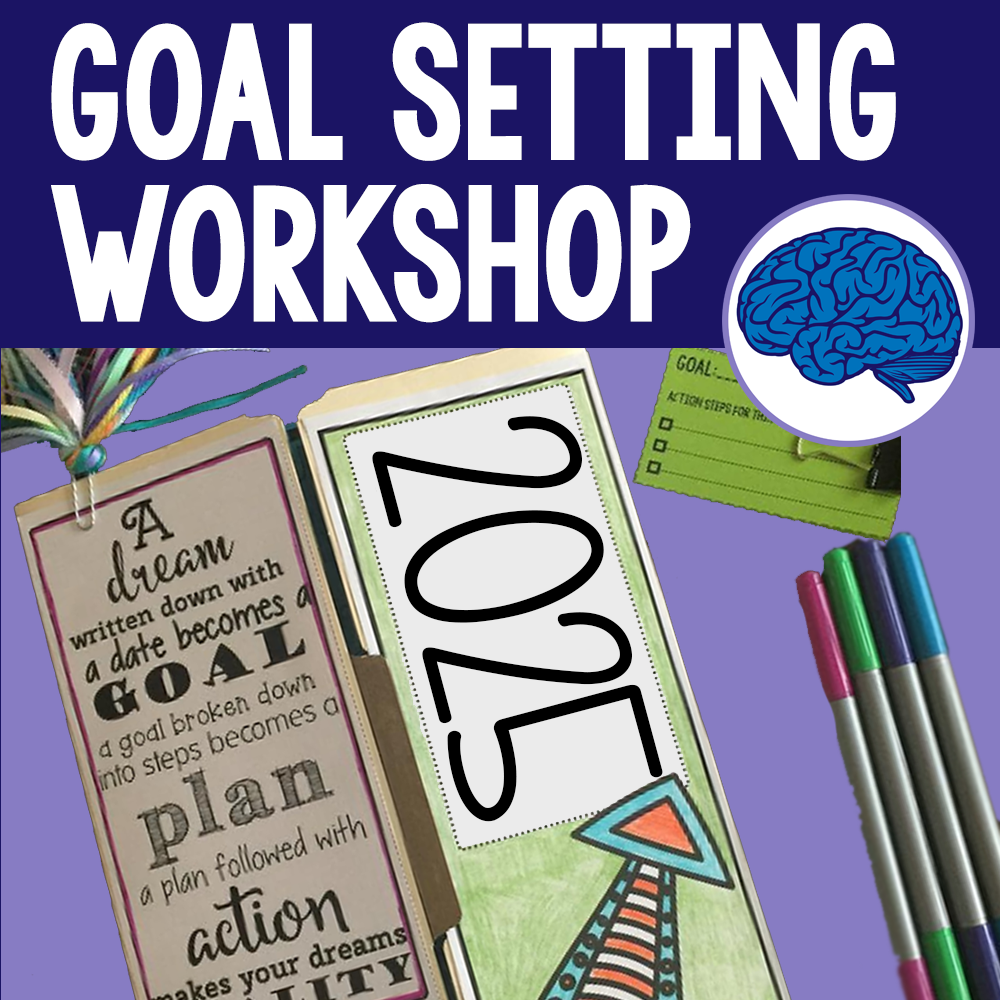
Start Strong: 2025 New Year’s Goal-Setting Workshop (Grades 4–12)
This resource is perfect for students who are new to SMART goals, providing a structured, engaging way to introduce goal-setting while fostering creativity and critical thinking.
What’s Included?
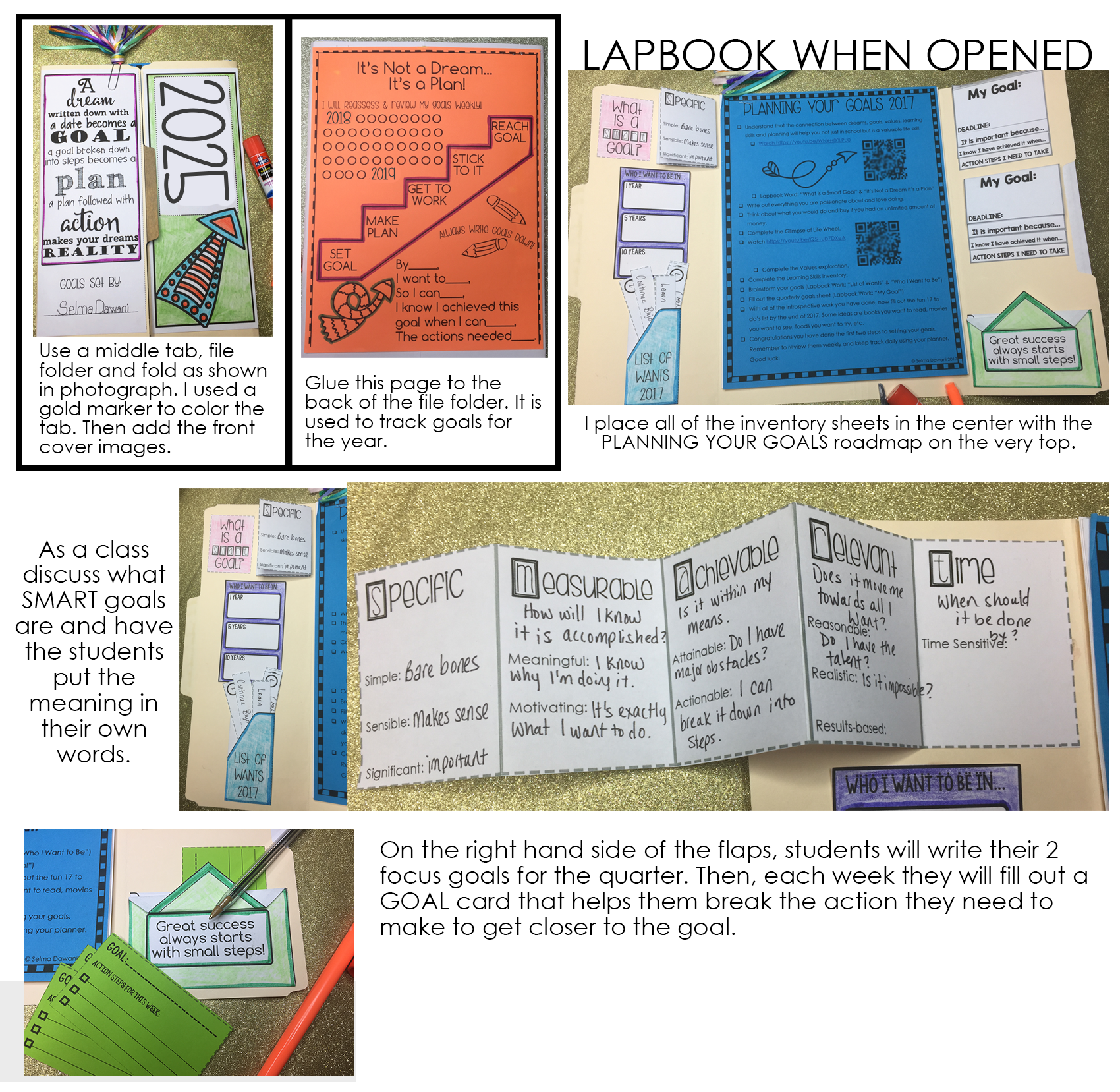
Goal Setting Lapbook
Buy once and get the date updated each year!
SMART Goals Examples for Beginners
Improve math grades: “Increase my math grade from 75% to 85% by the end of the semester by attending weekly tutoring sessions.”
Read more books: “Finish three novels by the end of the semester by dedicating 30 minutes each evening to reading.”
Interactive Worksheets
Students reflect on their values, brainstorm goals, and define SMART objectives in a hands-on way.
The Wheel of Life Activity (Specific for Student Life!)
A creative self-assessment to identify areas of growth, like academics, health, and fun.
Goal-Setting Templates & Lapbook
Students create a lapbook to organize their academic goals, track progress, and celebrate achievements.
Engaging Activities
Fun exercises like “If I had an unlimited amount of money” encourage students to dream big while staying grounded in actionable steps.
Benefits for Students
- Learn how to write clear, actionable goals.
- Build foundational skills in time management and accountability.
- Foster a sense of purpose by connecting goals to personal values.
📌 Get Started Here
Advance Their Skills: Advanced Goal-Setting Planner
For classrooms where students are already familiar with SMART goals, this advanced planner provides a comprehensive, year-long solution for goal-setting, tracking, and reflection.
SMART Targets Worksheets & Templates
Students break down objectives into actionable steps with clear, structured guidance.
Example: Study consistently: “Study for 2 hours daily for the next 30 days to prepare for final exams.”
Habit Trackers & Reflection Activities
Build consistency and self-awareness by tracking progress and reflecting on habits.
Goal-Setting Templates for Long-Term Success
Includes quarterly, monthly, and weekly goal sheets to help students stay on track.
Example: Complete assignments on time: “Submit all homework assignments one day before the due date for the next six weeks.”
Personal Growth Portfolio
A creative way for students to showcase progress and achievements throughout the year.

Benefits for Students
- Develop advanced skills in goal tracking and personal growth.
- Stay motivated with tools for consistent progress and reflection.
- Learn how to adjust strategies for long-term success.
📌 Explore the Planner Here
Comparison Table
Which Resource is Right for Your Classroom?
| Feature | New Year’s Goal-Setting Workshop | Advanced Goal-Setting Planner |
|---|---|---|
| Student Level | Beginner—new to SMART goals | Intermediate to advanced students |
| Focus | Teaching the SMART acronym and basics | Tracking and reflecting year-long |
| Activities | Worksheets, brainstorming, and creative lapbooks | Goal sheets, templates, and habit trackers |
| Best For | New Year’s resolutions or short-term goals | Long-term academic growth and organization |
| Example Goals | “Finish three novels by dedicating 30 minutes each evening.” | “Study for 2 hours daily for 30 days to prepare for exams.” |
Pair the Resources for Maximum Impact
Combine the New Year’s Goal-Setting Workshop with the Advanced Goal-Setting Planner to take students from learning the basics to mastering year-long goal management.
- Start with the Workshop to introduce SMART goals and teach the fundamentals in an engaging way.
- Transition to the Planner to help students track their goals, build habits, and reflect on their growth throughout the year.
Why Goal-Setting Benefits the Classroom
Teaching students to set and achieve SMART goals empowers them with practical life skills they can use in school and beyond. Here’s how:
- Time Management: SMART goals teach students to balance academics, extracurriculars, and personal life.
- Accountability: Students take ownership of their learning, fostering responsibility and independence.
- Long-Term Success: Goal-setting builds habits that contribute to lifelong growth and achievement.
FAQs About SMART Goals and Educational Tools
Equip Your Classroom for Success!
Incorporating SMART goals into your teaching equips students with practical skills they’ll use for years to come. By using engaging activities, effective tracking tools, and targeted resources, you can inspire students to define, track, and achieve their academic and personal aspirations.
📌 Get started today with these tools:
New Year’s Goal-Setting Workshop Grades 4–12
Let’s make this the year your students reach their full potential!




Leave A Comment