
The Surprising Creative Teaching Framework That Brings Learning to Life!
The Torrance Incubation Model of Teaching and Learning (TIM) is a practical, flexible framework designed by E. Paul Torrance to seamlessly integrate creativity into educational content. It provides educators with a structured yet adaptive approach to engaging students deeply, encouraging them to think creatively, and inspiring them to connect their learning to meaningful contexts.
One of the most striking aspects of TIM is the playful and metaphorical names Torrance gave to many of its strategies—like “Cutting Holes to See Through” or “Getting in Deep Water.” These unusual names are no accident; they reflect Torrance’s deep belief in the power of imagination and playfulness in learning. (More on this later!)
This blog post explores the three stages of TIM, the creative strategies that define each stage, and actionable steps to integrate creativity into your lesson plans.
The Three Stages of the Torrance Incubation Model
1. Heightening Anticipation
This first stage is all about capturing attention, generating curiosity, and creating a psychological state of readiness for learning. The goal is to motivate students and help them see connections between what they are learning and their personal experiences or interests.
Key strategies for this stage include:
- Create the Desire to Know: Introduce a question or challenge that makes students eager to learn.
- Heighten Anticipation and Expectation: Build suspense by presenting surprising or intriguing content.
- Get Attention: Engage students immediately by presenting something unexpected or captivating.
- Arouse Curiosity: Use stories, visuals, or hands-on activities to spark interest.
- Tickle the Imagination: Invite students to imagine possibilities, engage in role-playing, or explore “what if” scenarios.
- Give Purpose and Motivation: Clearly connect the content to students’ lives, emphasizing why it matters.
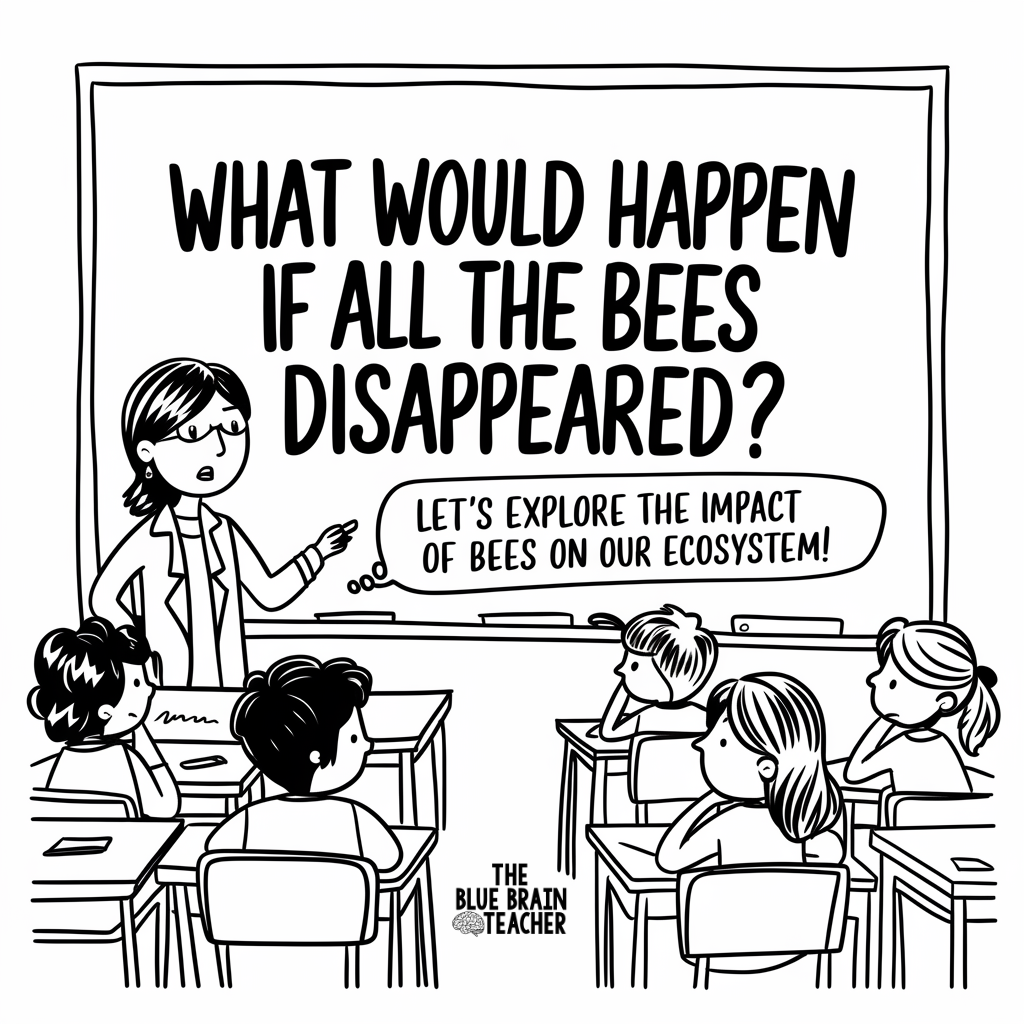
The teacher is using the “Create the Desire to Know” strategy. The inquiry question, “What would happen if all the bees disappeared?”, builds creativity and content skills by making the lesson immediately relevant to students’ lives. It sparks emotional engagement, as students imagine the real-world consequences of losing bees. The open-ended question fosters an inquiry-based approach, encouraging students to think critically and creatively about ecosystems. This “mystery” invites them to explore cause and effect, motivating them to discover how interconnected and vital bees are to their environment.
2. Deepening Expectations
Once curiosity is piqued, this stage focuses on sustaining engagement and guiding students into a deeper exploration of the topic. It alternates between anticipation and participation, encouraging learners to think critically, explore ambiguities, and make discoveries.
This stage is enriched by a range of metaphorical strategies:
- Digging Deeper: Analyze and synthesize information, connecting new knowledge to existing frameworks.
- Looking Twice: Encourage students to defer judgment and explore multiple perspectives or interpretations.
- Listening for Smells: Engage the senses to explore the topic in rich, meaningful ways.
- Cutting Holes to See Through: Help students summarize key ideas and discard irrelevant details to focus on what matters.
- Getting Out of Locked Doors: Support students in solving seemingly unsolvable problems or making leaps in their thinking.
- Getting in Deep Water: Encourage students to confront complexity, tackle taboo topics, and address unanswered questions.
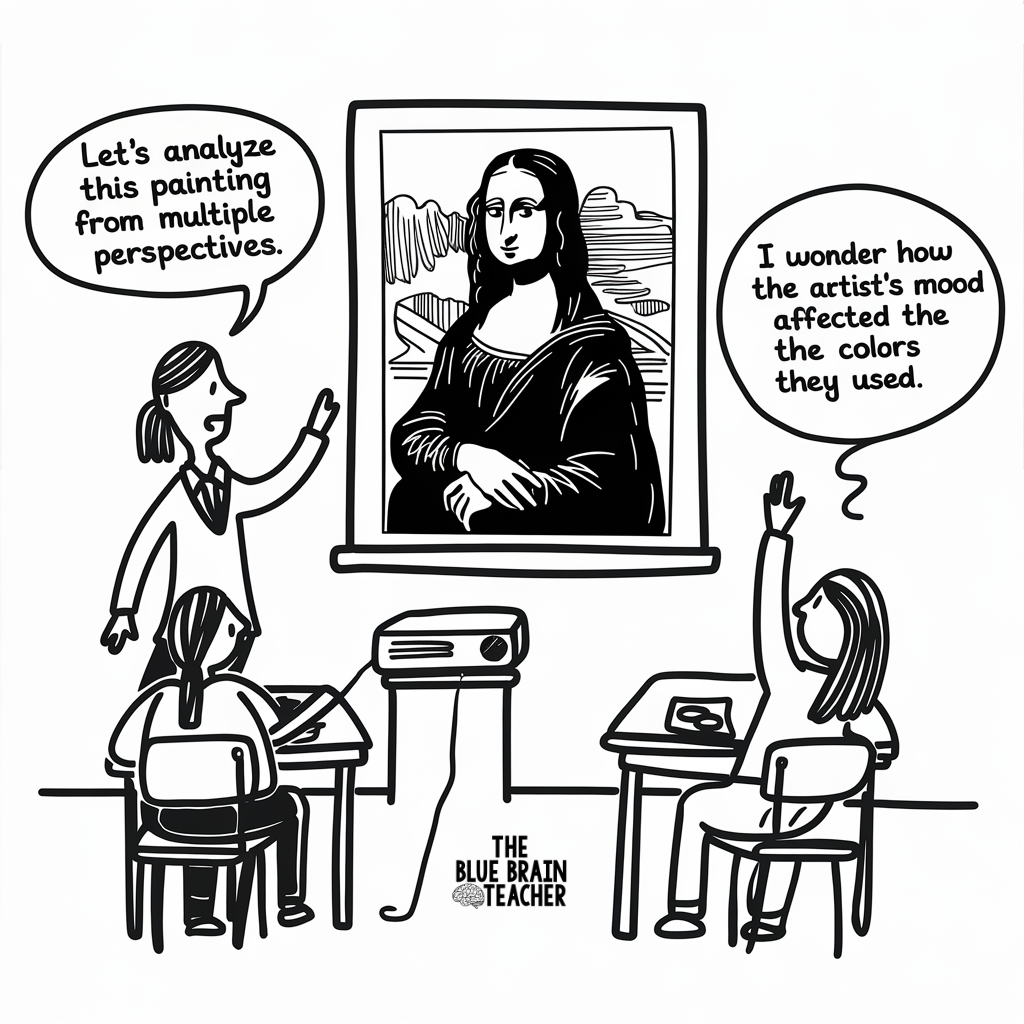
For the “Deepening Expectations” stage, the teacher is using the strategy “Looking Twice.” The inquiry-focused lesson encourages students to analyze the Mona Lisa from multiple perspectives. This strategy fosters critical thinking by inviting students to explore a well-known artwork through different lenses. The student’s thought bubble, “I wonder how the artist’s mood affected the colors they used,” deepens the inquiry, prompting students to consider the emotional impact of the painting. The approach encourages them to look beyond surface-level observations and question deeper meanings, motivating them to engage in a richer, more thoughtful exploration of art.
3. Extending the Learning
The final stage of the Torrance Incubation Model, Extending the Learning, focuses on helping students continue their creative journey beyond the classroom. This stage emphasizes applying what they’ve learned in meaningful ways while maintaining curiosity, playfulness, and engagement.
The strategies in this stage combine active participation with anticipation, ensuring that learning remains dynamic and relevant. They also encourage students to connect their ideas to personal experiences and envision future possibilities. Some of the key strategies include:
- Having a Ball: Use humor and laughter to create a positive, enjoyable atmosphere for applying and presenting ideas.
- Singing in One’s Own Key: Encourage students to personalize their learning, connecting it to their lives and unique perspectives.
- Building Sandcastles: Stimulate imagination and fantasy, allowing students to dream big and envision the ideal outcomes of their work.
- Plugging in the Sun: Motivate students to work hard by helping them find and use resources effectively.
- Shaking Hands with Tomorrow: Inspire students to explore how their learning connects to future goals and possibilities.

For the “Extending the Learning” stage, the teacher is using the strategy “Having a Ball.” The teacher’s positive reinforcement with the speech bubble, “I’m so proud of your effort and creativity!” creates a supportive, encouraging atmosphere for the student’s presentation. This strategy maintains engagement and enthusiasm as the student shares their creative project. The student’s thought bubble, “I hope this idea will inspire change!” reflects a deeper connection to the content, extending the learning beyond the classroom and into the real world. It emphasizes how the student is applying their knowledge in a meaningful way, sparking further curiosity and reinforcing the value of creativity in problem-solving.
Balancing Content and Creativity in the Torrance Incubation Model
A hallmark of the Torrance Incubation Model (TIM) is its emphasis on setting dual objectives: one for content mastery (what students need to learn) and one for creativity development (how they will enhance their creative thinking skills). This approach goes beyond teaching facts—it’s about empowering students to think critically, innovate, and apply their knowledge in meaningful and imaginative ways.
Torrance’s List of Creativity Objectives
To help educators infuse creativity into their lessons, Torrance outlined a set of creativity objectives that align with specific skills students can develop while engaging with the content. These objectives provide clear, actionable goals for fostering creative thinking alongside subject matter understanding. Examples include:
- Be Original: Encourage students to generate unique ideas or perspectives that challenge conventional thinking.
- Be Flexible: Help students approach a challenge from various perspectives or adapt their strategies to different scenarios.
- Produce and Consider Many Alternatives: Inspire students to brainstorm a wide range of potential solutions to a given problem.
- Combine and Synthesize: Guide students in merging diverse ideas or concepts into something new and meaningful.
- Highlight the Essence: Teach students to focus on the most critical aspects of a topic, discarding irrelevant information.
- Visualize It—Richly and Colorfully: Promote the use of vivid imagery or sensory details to enhance understanding.
- Breakthrough—Expand the Boundaries: Challenge students to explore ideas that push beyond conventional limitations.
These objectives are not just theoretical—they are practical tools that help educators design lessons that integrate creativity into the learning process. Teachers can pair one or two creativity objectives with their content objectives to create lessons that are both focused and dynamic.
Dual Objectives in Practice
When planning lessons using TIM, it’s important to define both content and creativity objectives. Here’s an example:
- Content Objective: Students will understand the roles of producers, consumers, and decomposers in an ecosystem.
- Creativity Objective: Students will generate original ideas for addressing an environmental issue, such as declining bee populations, and visualize their solutions using a mind map or storyboard.
Pairing these objectives ensures that students engage deeply with the content while developing essential creative skills like originality and visualization.
How to Use Torrance’s List of Creativity Objectives
Here’s how educators can apply Torrance’s list to integrate creativity into their lessons:

Integrating Creativity using the TIM Framework
Integrating creativity into TIM doesn’t have to be overwhelming. Start with lessons you’ve already designed and add a creativity objective aligned with one or two of Torrance’s skills. By focusing on both content and creativity, you’ll create lessons that not only meet curriculum standards but also inspire your students to think boldly, explore new ideas, and connect their learning to real-world challenges.
With Torrance’s dual-objective approach, education becomes more than the transfer of knowledge—it becomes a process of discovery, imagination, and transformation.
Final Thoughts: A Playful Approach to Creativity in Learning
The Torrance Incubation Model is more than just a teaching framework—it’s a mindset that infuses creativity into every part of the learning process. From the curiosity sparked in Heightening Anticipation, to the deep exploration of Deepening Expectations, to the joy of applying and imagining in Extending the Learning, TIM transforms classrooms into spaces where creativity thrives.
The whimsical names of Torrance’s strategies aren’t just for fun (though they are fun!). They reflect his belief that learning should be memorable, playful, and open to interpretation. Whether you’re “Building Sandcastles” or “Cutting Holes to See Through,” these metaphors invite educators and students alike to embrace creativity in both thought and action.
By blending creativity with meaningful content, TIM ensures that students don’t just learn—they discover, innovate, and grow. So as you explore ways to incorporate this model into your teaching, remember that creativity is not just a skill to be taught—it’s a way of seeing, thinking, and engaging with the world.
What strategies will you use in your next lesson to bring the magic of TIM to life? Let us know in the comments below!



Leave A Comment