

Gamification may sound fancy or intimidating at first, but you don’t need to be a tech wizard or game designer to use it effectively. In fact, some of the most powerful gamification techniques are simple, flexible, and totally doable in a regular classroom. Below, you’ll find 7 creative strategies teachers like you can try, along with ideas for how to make them work even if you’re short on time or resources.
You already know your students and your content. These techniques just give you a way to bring it all to life in a fun and meaningful way.
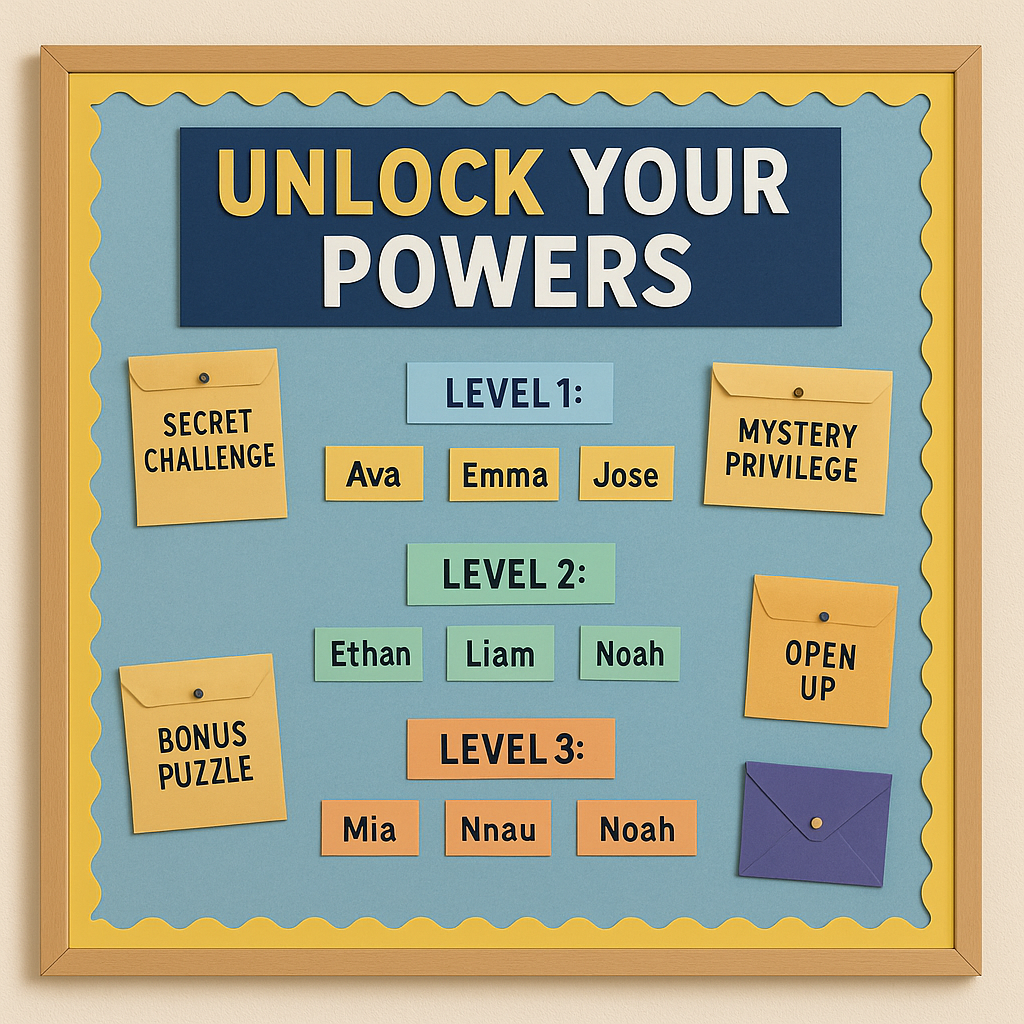
Unlockable Content or Powers
You don’t need fancy apps or hidden doors for this. All it takes is a little surprise and a reward that feels special.
How to try it:
Write a few “secret” challenges on index cards or slips of paper and keep them in an envelope. Once a student completes their work correctly, let them pull a card and reveal what they unlocked.
Some ideas:
A bonus question worth extra credit.
A riddle no one else has seen.
A privilege like choosing the next group activity or sitting in the teacher’s chair during a game.
You can prep a handful of these in 10 minutes and reuse them throughout the week.
Narrative and Role-Play
You don’t need costumes or elaborate props. Even simple storytelling can make a lesson feel like an adventure.
How to try it:
Pick a theme that fits your subject. For example:
-
History: students are diplomats or spies trying to influence events.
-
Science: students are astronauts documenting alien life.
-
Language arts: students are detectives analyzing clues in a text.
On your board or slide, introduce the “mission” and describe what success looks like. Then narrate little updates along the way as they complete tasks.
Even calling students by their “roles” (Agent Johnson, Captain Rivera) can make it exciting without extra work.
Mystery and Social Deduction
You can set up a mystery for your class using nothing more than a few clues and some creativity.
How to try it:
Write down the name of a historical figure, vocabulary word, or scientific concept and keep it hidden. Every time students complete a task, reveal a new hint. At the end, they guess what it is.
Alternatively, post a coded message on the wall and let students earn pieces of the code through correct answers.
You can even make it a group effort so no one feels left out.
Variable Rewards (Surprise Elements)
You don’t need to plan something for every single task. The point here is occasional, unexpected rewards.
How to try it:
-
At the start of the week, write a few “surprise” rewards on slips of paper and keep them in a jar.
-
Whenever you feel it’s the right moment, announce that today’s winner gets to pull from the jar.
Rewards can be simple: a homework pass, 5 bonus points, picking music for 5 minutes, or leading a warm-up.
Because it’s unpredictable, even small prizes feel exciting.
Cooperative Win Conditions
If you’re tired of seeing the same students always “win” while others feel left behind, try making the goal something everyone works toward.
How to try it:
-
Set a class-wide goal, like “If everyone turns in their homework 3 days in a row, we earn a class game day.”
-
Track the group’s average quiz score and unlock a bonus activity if it meets a certain level.
You can track progress on the board so everyone can see the team moving forward together.
Real-Life Integration
Show students that learning doesn’t stop when they leave the classroom.
How to try it:
-
Challenge students to use vocabulary words at home and report back the next day.
-
Give points or recognition for helping peers, teaching a younger sibling, or sharing knowledge with someone outside class.
You can keep a chart where students write down what they did outside of school.
Reverse Leaderboards
Instead of only celebrating the “best,” shine a light on all kinds of achievements.
How to try it:
Create a board with categories like:
-
Most Improved
-
Biggest Risk-Taker
-
Most Helpful
Update it weekly or monthly. Even a sticky-note display can work beautifully.
This builds confidence for students who might not usually feel noticed.
You Can Do This
- Start with just one idea from this list. You don’t need to transform everything overnight.
- Use what you already have: markers, index cards, a whiteboard, and your imagination are enough.
- Explain the game to your students so they know it’s meant to help them learn, not just to win prizes.
- Observe what works and adjust. Every class is different, and you know your students best.
Gamification is simply a way to add a bit of fun, purpose, and connection to what you’re already doing. It’s not about being perfect or making every lesson a show. It’s about creating moments that help students care, try, and feel proud of their progress.



Leave A Comment